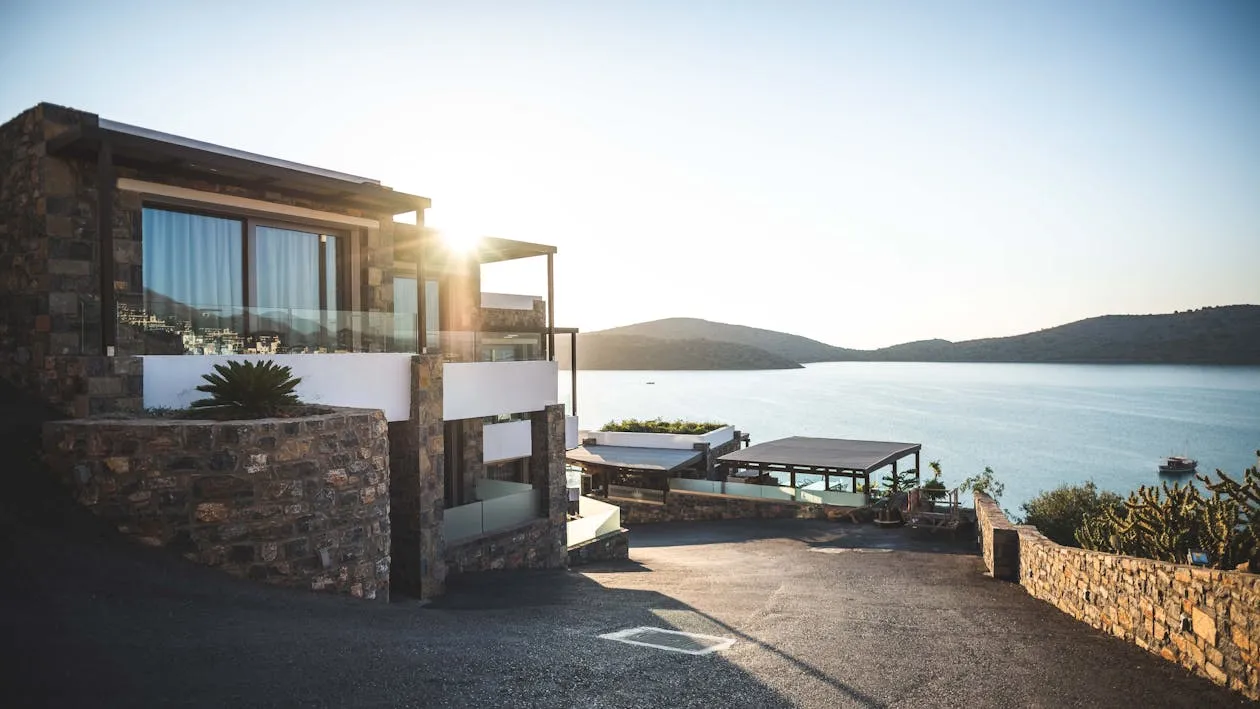
A significant share of Antalya's housing stock belongs to owners who are not in the city for most of the year. Some use their property as a summer home, some rent it out, and some have never seen the apartment they bought as an investment. What they all have in common is that sooner or later a renovation becomes necessary — and they are in another country when it does.
Technically, a remotely managed renovation is no different from one managed on site. What differs is the mechanism of control. An owner who is present can stop work the moment they see something going wrong; an owner abroad knows only what they are told. This entire guide is about closing that information gap.
We covered the ownership and investment side of this subject in our guide for foreign property owners in Antalya. If you want to understand how the process itself works, our article on turnkey renovation is a useful companion piece.
Why Remote Renovation Is a Different Job
In a project managed on site, the owner drops by weekly, sees progress and settles small decisions on the spot. In a remote project none of those three things happen by themselves; each has to be replaced by a system.
- Delayed decisions cost money: On site, "shall we move this socket 20 cm to the right?" is answered in thirty seconds. Remotely, the same question can take half a day once time zones and message threads are involved. Most of these decisions should be closed during the design phase, before work begins.
- You only know what you can see: Once a wall is closed, nobody can see the pipework behind it. Photographing every stage before it is covered should therefore be a contractual obligation, not a courtesy.
- Some steps require a signature: Building management applications, municipal procedures, certain material deliveries. If you do not settle how these will be handled at the outset, the project stalls midway.
- Trust cannot be replaced by a contract, but it can be supported by one: The only real leverage an absent owner holds is the payment schedule. Structuring it correctly is the most critical part of the job.
Before You Start: Your Property on Paper
Three questions need answering before you plan anything, and none of them concern the physical condition of the property — they concern its records:
- Does the building have an occupancy permit? Work carried out in a building without one can compound existing irregularities and make obtaining a permit harder later.
- What does the approved plan look like? The architectural plan registered with the municipality may not match the apartment as it stands today. Changes made by previous owners may never have been recorded. You need to know this gap before adding to it.
- What does the management plan say? Every condominium building has one, and it can impose rules beyond what the law requires: working hours, lift use, debris removal, deposits.
All three documents can be obtained remotely: title deed and occupancy records via e-Devlet, the approved plan from the relevant municipality's planning archive, and the management plan from the building manager or the land registry office. Skipping this step is the most common reason projects hit a surprise halfway through.
 Any work not photographed before it is covered can never be inspected afterwards.
Owners' Consent and Building Management
This is the most misunderstood topic. Start with a simple distinction: the inside of your own unit and the common areas are governed by different rules.
Work that stays within your apartment and does not harm the main structure generally requires nobody's permission. Painting, wallpaper, flooring, kitchen and bathroom renovation, joinery and lighting all fall into this group.
By contrast, construction, repairs and installations in common areas, and anything that alters the external appearance of the building, require the written consent of a qualified majority of the other owners under the Turkish Condominium Law. The examples we encounter most often are:
- Mounting or relocating an air conditioning outdoor unit on the facade
- Enclosing a balcony, or changing facade colour or cladding
- Drilling new openings through the facade for pipework
- Any intervention in shared water, waste, gas or electrical systems
- Relocating an entrance door, or work extending onto the stairwell landing
In addition, changes that would damage the main structure are prohibited even inside your own apartment. Interfering with load-bearing columns, beams and shear walls falls into this category, and it is not something owners' consent can resolve — it is the subject of the next section.
A practical note: do not accept verbal permission. Ask building management for written approval that lists the planned works item by item and states the date range. This protects you from disputes with neighbours and remains in your hands if objections surface later.
Municipality, Permits and the Load-Bearing Structure
Not every renovation requires a permit. The distinction is roughly as follows:
- No permit required: Interior work that does not affect the load-bearing structure, the number of independent units, the designated use or the external appearance — painting, cladding, kitchen and bathroom renovation.
- Permit required: Any intervention in the load-bearing structure, merging or subdividing units, changing the designated use (for example converting a residence into a commercial unit), and work altering the facade.
The structural question deserves particular emphasis. Cutting a column or shear wall or drilling through a beam is not merely an administrative breach; in an earthquake country it is a matter of life safety. Whether a wall is load-bearing cannot be determined by eye — it is read from the approved structural drawings. "That wall is thin, we can take it out" is the single most dangerous sentence you can hear from a contractor.
Where a permit is required, the process runs through drawings prepared by an architect or civil engineer and requires the owner's signature. If you are abroad, this is where power of attorney comes in.
Specific to Antalya: Summer Work Restrictions
The single biggest factor shaping a renovation schedule in Antalya is the season, for two separate reasons.
The first is regulatory. In areas with heavy tourism, municipalities may restrict the hours and periods during which noisy construction is permitted. Residential complex and apartment management plans may also limit noisy work during the summer season, or prohibit it entirely between certain dates. Because these rules differ from district to district and building to building, no general answer is possible; you need to ask both your municipality and your building management before starting.
The second is technical. High temperatures change how screed and plaster cure; a surface that dries too quickly is more prone to cracking. Paint applications also fail to deliver the intended finish in extreme heat. We touched on the effect of the Antalya summer on building materials in our article on the art of staying cool in Antalya.
Together these two factors point to a clear conclusion: the ideal window for comprehensive renovation in Antalya is autumn and winter. A project starting in late September finishes before the summer season opens. For a rented property this timing also minimises lost income. In short-term rental conversions the scheduling decision directly affects return on investment.
Power of Attorney and Authorisation
This is where overseas owners hesitate most, and the hesitation is justified. A power of attorney is a powerful document; drawn too broadly, it can transfer authority extending as far as selling the property.
The right approach is to keep the scope as narrow as possible. For a renovation it is enough to cover: applications to building management, municipal renovation procedures, utility subscriptions, and signing material delivery records. Authority to sell, mortgage, lease or transfer should never be included.
A power of attorney can be issued at the Turkish consulate in your country of residence. Documents drawn up before a local notary instead require an apostille and a sworn translation. Issuing it with an expiry date — six months or a year — adds a further layer of security.
Who to authorise is a separate question. Granting power of attorney to the contractor is convenient but creates a conflict of interest: the same party ends up both doing the work and approving it on your behalf. Where possible, authorise an independent person — a lawyer or someone you trust personally.
Contract and Payment Stages
In a remotely managed project the contract is the owner's principal instrument of control. A sound renovation contract contains:
- An itemised scope of work: not "bathroom renovation", but the fixtures to be removed, the tile size and brand, the tap model and the shower tray type, item by item.
- A materials annex: with brands, models and colour codes. Without it, an argument about "equivalent materials" is inevitable.
- A schedule with milestones: start date, interim deliveries and completion.
- A payment plan: tied to stages, with percentages stated explicitly.
- Delay and defect provisions: what happens if the schedule slips.
- Warranty periods: stated separately for workmanship and materials.
The golden rule for payments is this: payment should follow progress, never run ahead of it. Paying all or most of the total upfront is the greatest risk in a remotely managed project. A balanced structure usually looks like this: an initial payment on contract and mobilisation, an instalment on completion of structural work, another once plumbing and electrical infrastructure is finished, a further one after finishing work, and the balance on handover.
Each instalment should be conditional on that stage being documented with a photographic report. Payments should be made by bank transfer to the company's corporate account, avoiding cash and transfers to personal accounts. For transfers from abroad, consult an accountant regarding applicable currency regulations and tax obligations.
 Who represents you on site matters more than any clause in the contract.
Remote Oversight: The Reporting Routine
"We'll send photos" is not a reporting system. In a remote project the oversight routine has to be defined at the outset:
- A fixed interval: a report sent weekly, on a set day. Photos arriving at random show activity, not progress.
- Fixed angles: each room photographed from the same positions, so you can actually see the difference week to week.
- Pre-closure records: pipework photographed before walls, screed or suspended ceilings are closed. This is the one stage that cannot be recovered later.
- A live connection: a short video call once a week. What a photograph does not show, you learn by asking.
- A written decision record: every decision taken by phone confirmed by message. Most disputes in remote projects arise from decisions that stayed verbal.
Setting this up places an additional burden on the contractor, and that should be stated openly at the start. Making reporting a clause in the contract prevents it from being "forgotten" later.
Selecting Materials from a Distance
Choosing materials you cannot see is the hardest part of a remote renovation. Colour on a screen is not colour in daylight, and this is especially true of ceramics, natural stone and timber.
Practical solutions:
- Physical samples by courier: for critical surfaces — flooring, bathroom tiles, kitchen worktops. Low cost, high value.
- Consistent lighting: photograph samples under the same conditions each time, preferably in daylight and with a reference object beside them.
- Work from brands and model codes: deciding from the manufacturer's own catalogue code is safer than any description of something "similar".
- A live tour of the supplier: walking the material warehouse on a video call produces far better decisions than photographs.
For decisions that are expensive to reverse, such as flooring, our articles on choosing floor coverings and solid hardwood parquet may help you compare.
Handover, Inspection and Warranty
Handover is not the day the work finishes; it is the day it is inspected. If you are abroad you have two options: travel to Antalya once for this purpose, or have the inspection carried out by an independent professional. The second is usually more economical.
Documents to request at handover:
- A snag list (handover record) with a schedule for resolving each item
- Invoices and warranty certificates for the materials used
- The full pre-closure photo archive, where services were altered
- A written workmanship warranty
The final balance should be paid only after the snag list is cleared. Making the last payment before the handover record is signed means giving up the last instrument of control you hold.
The Five Most Common Mistakes
- Working without a written contract. A verbal agreement with a contractor found through a personal recommendation is the costliest mistake in remote projects.
- Paying the whole amount upfront. The moment you lose payment leverage, you lose influence over the schedule.
- Leaving permissions until later. An objection from building management raised after work has begun can end in demolition of completed work.
- Not requesting pre-closure photographs. You will never see behind that wall again.
- Starting in midsummer. The hardest period both technically and in regulatory terms; waiting for autumn often finishes the job sooner.
If you are planning to renovate your Antalya property from abroad, setting the process up correctly from the start is far easier than correcting it later. To review your project's scope, schedule and permit requirements together, get in touch with us.