However good wood-look laminate and vinyl become, nothing imitates the feel of real wood underfoot, the patina that grows more beautiful with the years, and the value it adds to a property. In Antalya, demand for real hardwood floors has risen sharply in recent years — particularly in villas, premium apartments and boutique hotels. Yet "real wood" covers very different products, and in a Mediterranean climate the right choice directly determines how long your floor will last.
What Is Real Hardwood Flooring?
Real hardwood flooring is the umbrella term for floors whose surface is made entirely of natural timber. The fundamental difference from laminate is that the wear layer is genuine wood — not a printed photograph of wood on decor paper:
- Natural texture and character: Every board is unique; knots, grain patterns and tonal shifts give a space handcrafted character. No two real wood floors are ever alike.
- A renewable surface: When a real wood floor gets scratched or dull, it can be sanded and refinished. Laminate and vinyl cannot — damaged sections must be replaced entirely.
- Property value: A real wood floor is one of the few interior investments recorded as a plus in property valuations. In Antalya's housing market, which strongly appeals to international buyers, it is a powerful selling point.
- Thermal and acoustic comfort: Wood is a natural insulator. It feels warm underfoot in winter and softens footstep noise considerably compared to ceramic tile.
Solid vs Engineered Parquet
Real hardwood flooring is produced in two main constructions. The right choice depends on climate, subfloor and how the space is used:
- Solid parquet: Milled from a single piece of timber, typically 18-22 mm thick. It can be sanded 4-6 times over its life, which translates into more than 50 years of use. In return, it moves with humidity and temperature changes — expansion and contraction make installation and climate control critical.
- Engineered parquet: A 2.5-6 mm real wood wear layer over cross-laminated plywood or HDF core layers. The cross-grain structure reduces moisture movement by up to 70%. The look is one hundred percent real wood; the stability is far higher than solid. This is the real-wood solution compatible with underfloor heating and Antalya's humid coastal climate.
- Wear layer thickness: The thicker the top layer of an engineered board, the more sanding cycles it allows. A 4 mm or thicker layer gives 2-3 refinishes — a figure worth checking on long-term projects.
- Which one, when? In dry, stable climates and above-ground rooms, solid parquet is a fine choice. In Antalya homes near the sea, with air conditioning or underfloor heating, engineered parquet is the safe option.
Wood Species: Oak, Walnut, Teak
The species determines the floor's colour, hardness and moisture resistance. The most popular choices:
- Oak: The world's most widely used flooring timber. Hard, wear-resistant and rich in grain. With natural, smoked, white-washed or coffee-toned finishes it adapts to any interior style — and offers the strongest price-performance balance.
- Walnut: A classic of luxury interiors with its dark chocolate tones and dramatic grain. Slightly softer than oak, it performs beautifully in medium-traffic areas such as bedrooms and living rooms.
- Teak and iroko: Tropical species with high natural oil content and outstanding moisture resistance. Teak can be used even in bathrooms, spas and terraces — ideal for Antalya's coastal homes, at a premium price.
- Ash and maple: Light-toned species favoured for Scandinavian-style interiors. Ash stands out for its flexible, impact-resistant structure.
- Hardness rating (Janka): For heavily used areas, check the timber's Janka hardness. Oak (~1300) and ash (~1320) suit high traffic; soft species like pine (~700) dent quickly in busy household zones.
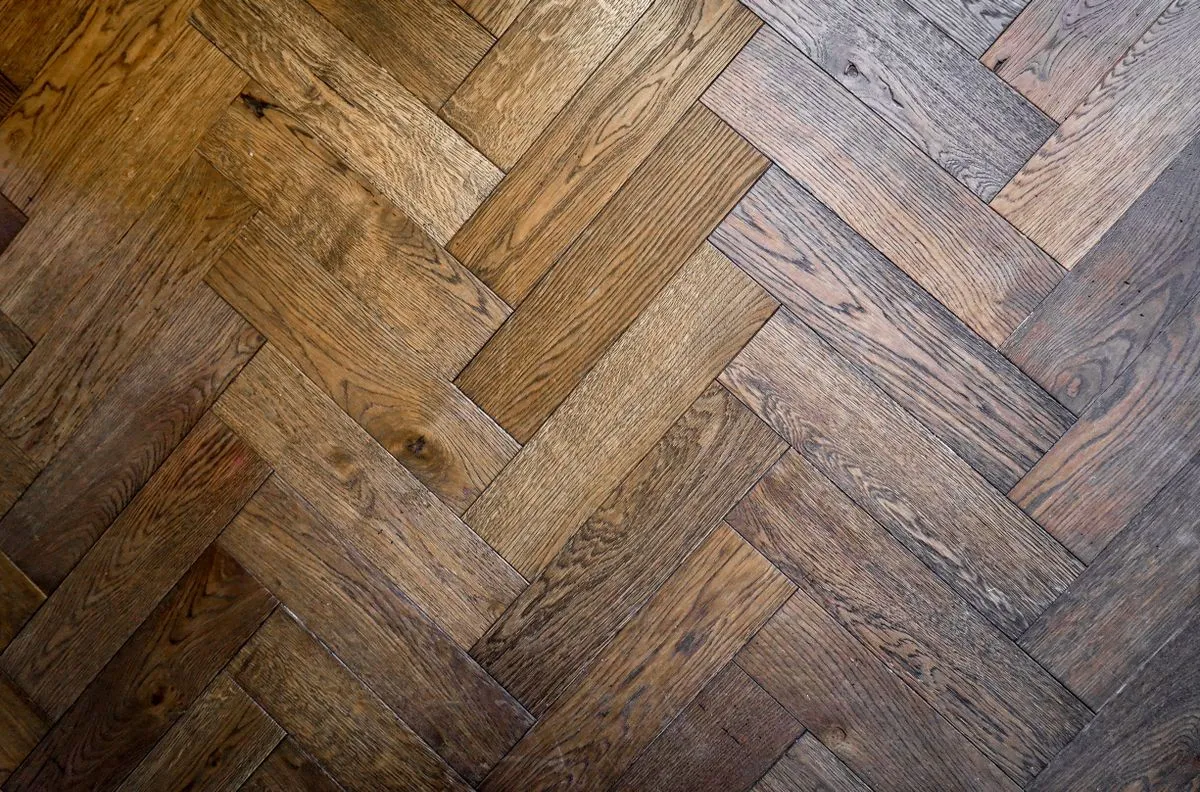 Solid oak in a herringbone pattern: a natural patina that grows more beautiful with the years.
Laying Patterns: Herringbone, Chevron, Straight
The same wood laid in a different pattern creates an entirely different effect. Pattern choice affects aesthetics as well as waste rates and labour cost:
- Straight (parallel) laying: Boards run parallel to a wall or with the light. Lowest waste, fastest installation. Long boards make a room feel more spacious.
- Herringbone: Rectangular blocks interlocking at 90 degrees — the timeless signature of classic European apartments and today the most requested pattern in modern villas as well. Labour time is roughly double that of straight laying.
- Chevron: Board ends cut at 45-60 degrees to form a true V. Sharper and more contemporary than herringbone; the most demanding pattern in cutting waste and craftsmanship.
- Versailles and panel patterns: Geometric compositions within square panels — striking floor art for large salons and classical projects.
- Board width: Wide boards of 18-22 cm are today's trend, lending a modern, airy feel. Narrow boards (7-9 cm) create a classic, densely patterned look.
Real Wood in Antalya's Climate
Wood is hygroscopic: it absorbs and releases moisture with the ambient humidity. Antalya's climate profile highlights these points when choosing parquet:
- High summer humidity: On the coastal strip, relative humidity sits at 60-75% in summer. Solid parquet may expand in these conditions, while engineered parquet stays stable thanks to its cross-layered core. For homes within 2-3 km of the sea we recommend engineered flooring.
- Air conditioning: Long periods of air conditioning dry the air, which can shrink wood and open gaps. The ideal range is 40-60% relative humidity; in heavily air-conditioned homes, balanced ventilation between seasons matters.
- Strong sunlight: UV changes wood tone over time (oak darkens, teak silvers). UV-filtering window film or UV-protective finishes slow the change. Moving rugs and furniture occasionally during the first year prevents tone differences.
- Underfloor heating: Surface temperature must not exceed 27°C and only engineered parquet approved for underfloor heating should be used. Solid parquet is not recommended over underfloor heating.
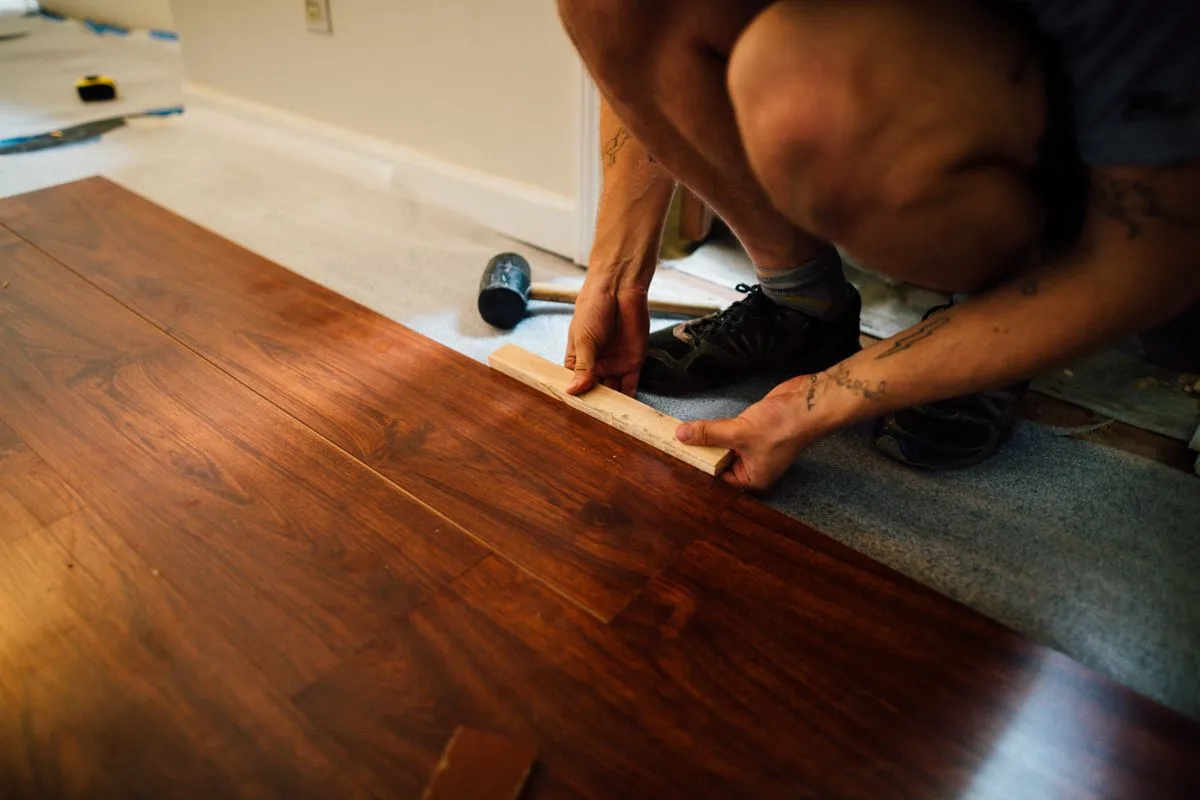 Professional installation: correct subfloor preparation and expansion gaps determine a floor's lifespan.
The Installation Process
With real hardwood, the quality of the result depends on installation discipline as much as on the material. A professional application includes these steps:
- Acclimatisation: Packs of parquet rest unopened in the room for 48-72 hours so the wood adjusts to ambient humidity, minimising movement after installation. Skipping this step is the most common source of failure.
- Subfloor moisture testing: Screed moisture must be below 2% for solid and 2.5% for engineered parquet (CM method). Fresh screed can take weeks to reach these values; impatience ends in a buckled floor.
- Flatness check: More than 3 mm deviation under a 2-metre straightedge calls for self-levelling compound. An uneven subfloor is the main cause of creaking and open joints.
- Installation method: Solid parquet is fully glued down with elastic polyurethane adhesive. Engineered parquet can be fully glued or floated with a click system over an acoustic underlay.
- Expansion gaps: A 10-15 mm gap is left along walls and around fixed elements, concealed by skirting. Spans over 8 metres need an intermediate expansion profile.
Maintenance, Sanding & Refinishing
With the right care, a real wood floor keeps its character for decades — and even grows more beautiful as it ages:
- Daily cleaning: A soft broom or a vacuum with a parquet head is enough. Use a well-wrung, slightly damp cloth instead of a wet mop — standing water is wood's number one enemy.
- The right products: Choose pH-neutral cleaners made for wooden floors. Ammonia, bleach and steam cleaners must never be used.
- Surface protection: Oiled surfaces benefit from maintenance oil once a year; lacquered surfaces from a polish every 2-3 years. Felt pads under furniture legs and a doormat at the entrance are simple but effective measures.
- Sanding and refinishing: When the surface tires, the floor is sanded with dust-extraction machines and re-oiled or re-lacquered — quite literally a second life for the floor. Solid parquet allows 4-6 cycles, quality engineered parquet 2-3.
- Local repair: Deep scratches and dents can be fixed by replacing only the damaged boards — one of real wood's biggest practical advantages over laminate.
What Drives the Price
Real hardwood prices span a wide range. When comparing quotes, look at these items:
- Species and grade: Oak is the most balanced price point; walnut and teak run 40-80% higher. Even within one species, "select" (knot-free) grades cost more than "rustic" grades.
- Solid or engineered: For the same species, solid parquet usually carries a higher material cost; in engineered flooring, wear-layer thickness and core quality set the price.
- Pattern and labour: Herringbone and chevron require 50-100% more labour and 10-15% more cutting waste than straight laying.
- Subfloor preparation: Levelling screed, moisture barriers and removal of the old covering are budget items that should not be overlooked.
- Finish: Factory-finished products need no on-site treatment; unfinished parquet is sanded and finished after installation — added labour, but a seamless, flawless surface.
"A real wood floor is not a covering — it is an investment that ages with your home. Proper installation is half its lifespan."
For expert guidance on choosing the right real hardwood floor for your home or project, get in touch with us. We offer free site surveys and consultancy.