Foreign property owners in Antalya face a distinctive challenge: Mediterranean summers push air-conditioning bills sky-high, older buildings rarely meet modern insulation standards, and the rental market increasingly rewards properties with low running costs. Sustainable renovation answers all three problems at once. By investing in the right materials, systems, and design choices, you can reduce annual energy and water costs by 40–60%, comply with Turkish energy performance regulations (TS 825 thermal insulation standard), and achieve a rental premium of 10–20% over comparable unimproved apartments. The sections below walk through each category in practical, actionable detail.
Thermal Insulation: The Foundation of Sustainable Renovation
In Antalya's hot Mediterranean climate, inadequate thermal insulation is the single biggest driver of energy waste. Turkish standard TS 825 specifies minimum thermal resistance values (R-values) for each climate zone; Antalya sits in Climate Zone 2, requiring at least 8 cm of exterior facade insulation on most residential buildings. Bringing a property up to — or beyond — this standard is the most cost-effective first step in any sustainable renovation.
- Exterior facade insulation (mantolama): Applying 10–12 cm of EPS or mineral wool boards to sun-facing facades can lower indoor temperatures by 5–8 °C during Antalya summers, directly reducing air-conditioning loads by 35–45%.
- Natural wool insulation: Sheep's wool batts are gaining popularity for their hygroscopic properties — they absorb and release moisture without losing insulating performance. Ideal for villas where breathable walls are a priority.
- Cork insulation boards: Expanded cork is a fully renewable, rot-resistant material that performs well in Antalya's coastal humidity. It also acts as a natural acoustic damper — a useful bonus for rental properties near tourist zones.
- Roof and loft insulation: Up to 25–30% of a building's total heat gain in summer enters through the roof. Polyurethane spray foam or 15 cm of rock wool in the loft void seals thermal bridges completely.
- Floor insulation: Ground-floor apartments and basement-level rooms benefit from XPS boards under screed, reducing winter heating costs by 15–20%.
"Every euro invested in proper facade insulation in Antalya pays back three to four times over the lifetime of the building — before you even factor in the rental premium."
Eco-Friendly Flooring Options
Flooring is one of the most visually impactful elements of any renovation and one of the largest sources of construction waste. Choosing sustainable floor coverings adds character, reduces environmental impact, and — in many cases — outperforms conventional alternatives in durability and maintenance costs.
- Bamboo: A fast-growing grass that reaches harvest maturity in 5–7 years (versus 30–50 years for hardwood). Strand-woven bamboo boards are harder than oak, handle humidity well, and suit Antalya's climate perfectly. Look for products certified formaldehyde-free.
- Cork flooring: Harvested by stripping bark from living cork oak trees without felling them, cork is 100% renewable. Its cellular structure is naturally insulating, sound-absorbing, and anti-microbial — a practical advantage in holiday rentals with high guest turnover.
- Reclaimed wood: Timber salvaged from demolished buildings, old boats, or railway sleepers carries embodied carbon already "spent." Each plank has a unique grain and patina that new wood cannot replicate — a strong selling point in the luxury short-let market.
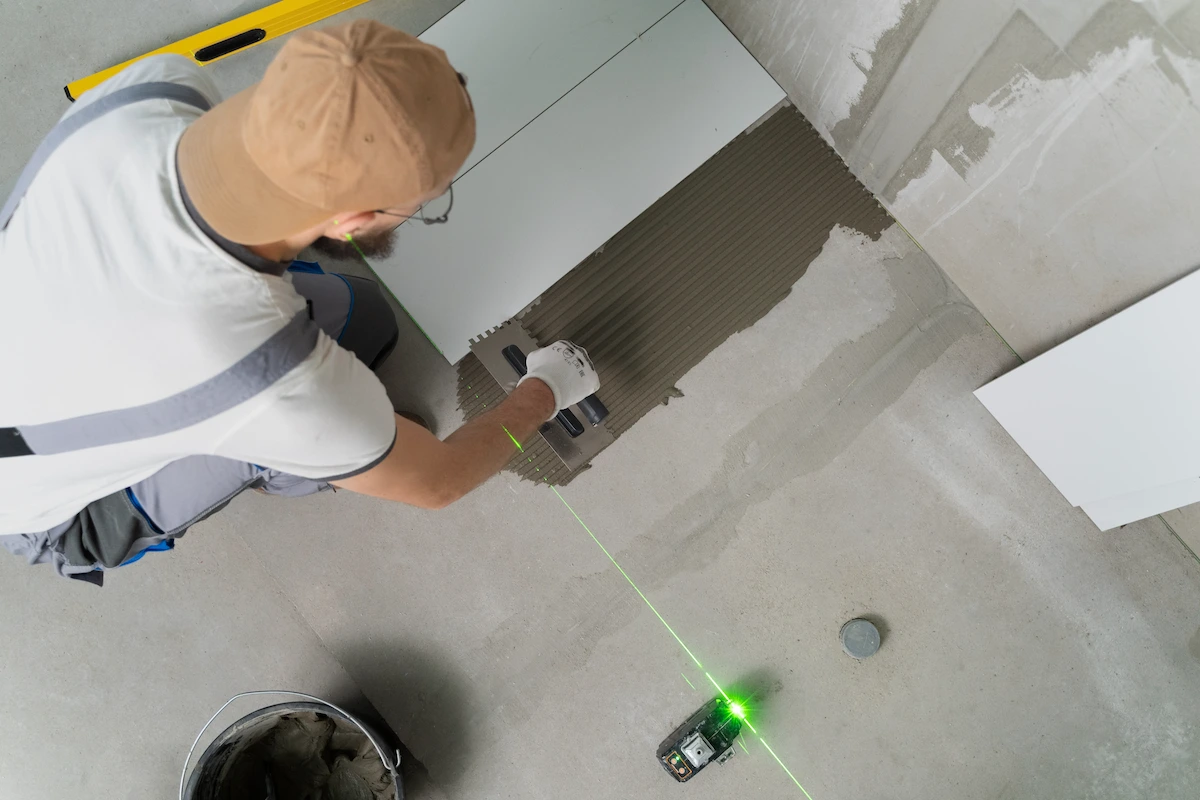
- Large-format porcelain tiles: When produced with a high recycled content (many Turkish manufacturers now exceed 40% recycled feldspar), large-format porcelain slabs are extremely durable, require no chemical sealing, and reflect natural light — reducing the need for artificial lighting by day.
 Bamboo, cork, and reclaimed wood bring warmth and sustainability
to any Antalya property.
Bamboo, cork, and reclaimed wood bring warmth and sustainability
to any Antalya property.
Low-VOC Paints and Healthy Interior Finishes
Conventional paints, adhesives, and sealants release volatile organic compounds (VOCs) — a family of chemicals linked to respiratory irritation, headaches, and long-term health effects. In a hot climate like Antalya, where windows are often closed during air-conditioned summers, VOC concentrations can be significantly higher indoors than outdoors. Sustainable renovation addresses this directly.
- Low-VOC and zero-VOC wall paints: Water-based formulations now match the coverage and colour range of solvent-based paints. Look for the EU Ecolabel or equivalent certification, which caps VOC content at 30 g/litre for matt emulsions.
- Natural clay plasters: Traditional lime and clay renders regulate indoor humidity naturally, absorbing moisture when the air is humid and releasing it when dry. They contain no synthetic additives and create a distinctive matte texture highly regarded in boutique rental properties.
- Plant-based adhesives and sealants: For tile-setting and flooring installation, natural resin or starch-based adhesives eliminate one of the biggest hidden sources of indoor VOCs — the glue beneath your feet.
- Microcement and polished concrete finishes: When specified without solvent-based topcoats, microcement surfaces are low-VOC, extremely durable, and easy to maintain — a popular choice in Antalya's growing premium rental sector.
Energy-Efficient Windows and Doors
Windows account for 25–30% of a building's total energy loss. In Antalya, the challenge is two-directional: keeping summer heat out while retaining warmth during cooler winter nights. Upgrading glazing and frames is therefore among the highest-impact steps in a sustainable renovation.
- Double glazing with Low-E coating: A Low-E (low-emissivity) metallic coating on the inner glass surface reflects infrared radiation, preventing solar heat gain in summer without sacrificing winter warmth. In Antalya, this can reduce air-conditioning demand by 20–25% compared to standard single-pane windows.
- Argon-filled triple glazing: Argon gas between the glass layers raises thermal resistance (U-value) to 0.6–0.8 W/m²K, a significant improvement over single-glazed aluminium frames at 5–6 W/m²K. Recommended for properties with west-facing facades exposed to afternoon sun.
- Thermally broken aluminium frames: A polyamide strip separating the inner and outer aluminium profiles eliminates the metal's conductivity. Thermally broken systems resist Antalya's coastal salt air better than PVC and maintain their geometry in extreme heat — an important consideration for tall villa openings.
- Insulated exterior doors: A quality insulated door with a polyurethane foam core and perimeter gasket can reduce hallway and communal area heat loss by up to 40% compared to a hollow-core metal door.
For a deeper look at how window upgrades fit into a broader energy-efficient renovation strategy, see our dedicated guide.
Solar Energy Integration in Antalya
Antalya records more than 2,900 sunshine hours per year — one of the highest figures in Europe and Turkey alike. This makes photovoltaic (PV) investment exceptionally attractive compared to northern European markets where the same hardware achieves far lower output.
- Rooftop PV systems: A 5 kW monocrystalline panel array (roughly 30–35 m² of south-facing roof) generates approximately 7,500–8,000 kWh annually in Antalya. The average Turkish household consumes around 3,500–4,500 kWh per year, meaning surplus energy can be sold back to the grid under Turkey's net-metering regulation (Yönetmelik No. 29099).
- Solar hot-water collectors: Evacuated-tube solar collectors can supply 80–90% of a household's annual domestic hot water demand in Antalya's climate. Installation costs are lower than a full PV system and payback is typically achieved within 3–4 years.
- Battery storage: Lithium-ion storage (e.g., 10 kWh capacity) allows self-consumption of solar energy produced during the day to be used in the evening, increasing grid independence to 70–80% for most Antalya households.
- ROI calculation example: A 5 kW PV system installed in Antalya currently costs approximately €4,000–€5,500 (materials and labour). Annual electricity savings plus grid feed-in income typically reach €700–€900. Payback period: 5–7 years. Panel warranty lifespan: 25 years. Net profit period: 18–20 years of free electricity.
Properties with solar installations consistently command a 8–12% rental premium in the Antalya market, as tenants and short-let guests increasingly factor running costs into their decision-making.
Water Efficiency: Fixtures, Rainwater Harvest, and Drip Irrigation
Water scarcity intensifies every summer in the Mediterranean basin. Sustainable renovation addresses consumption at three levels: inside the building, at the roof, and in the garden.
- Low-flow fixtures: Aerator-equipped faucets and water-efficient showerheads reduce bathroom water consumption by 30–50% with no perceptible drop in pressure. Dual-flush toilets (3/6 litre modes) save 20,000–30,000 litres per household per year compared to older single-flush cisterns.
- Rainwater harvesting: Antalya receives around 1,000 mm of rainfall annually, concentrated in the October–March period. A 5,000-litre underground cistern connected to roof gutters can collect enough water during the rainy season to cover garden irrigation needs through most of the summer without drawing on the mains.
- Greywater recycling: Treated greywater from showers and bathroom sinks can be redirected to toilet flushing or garden drip lines, recovering 150–200 litres per household per day.
- Drip irrigation systems: Soil-moisture sensors and weather-responsive controllers reduce garden watering by 40–50% compared to conventional sprinkler systems. In Antalya's tourist villa market, lush gardens maintained at low water cost are a direct commercial asset.
Sustainable Material Procurement in Turkey
One underappreciated dimension of sustainable renovation is the carbon footprint embedded in material transportation. Importing stone, tile, or timber from Northern Europe or Asia adds thousands of kilometres of shipping to a product's environmental account. Turkey offers exceptional local alternatives that are both ecologically sound and commercially distinctive.
- Antalya travertine: The Taurus Mountains surrounding Antalya are among the world's richest sources of travertine limestone. Sourcing stone from quarries within 50–100 km of the construction site slashes transport emissions and supports the local economy. Travertine is naturally cool underfoot — a performance benefit in a hot climate — and its neutral palette complements both traditional and contemporary interiors.
- Turkish terracotta and hand-made ceramics: Çanakkale and Kütahya have centuries-old ceramic traditions. Hand-made encaustic cement tiles and terracotta floor pavers are produced with minimal industrial processing, low embodied energy, and no synthetic polymer coatings.
- Recycled Turkish materials: An active market in reclaimed materials has developed in Turkey's major cities. Salvaged brick from Ottoman-era demolitions, antique timber beams, and reclaimed wrought iron are available through specialist dealers and can add extraordinary character to a renovation while keeping useful materials out of landfill.
- Regional timber: Certified pine and fir from the forests of the Western Taurus range are available through Turkish Forestry Administration (OGM) licensed suppliers. Locally sourced structural timber typically travels less than 200 km, compared to 2,000+ km for Northern European imports.
Cost vs. Long-Term Savings: Making the Case for Sustainable Renovation
The most common hesitation among property owners is upfront cost. Sustainable materials and energy systems do carry a premium over standard alternatives — typically 15–30% more at the point of purchase. However, a lifecycle cost analysis almost always reverses this picture.
- Facade insulation: Upfront premium over uninsulated construction: €15–25/m². Annual energy saving: 35–45% of heating and cooling costs. Payback: 3–5 years. Net saving over 20-year ownership: substantial.
- Solar PV system (5 kW): Investment: €4,000–€5,500. Annual saving + feed-in income: €700–€900. Payback: 5–7 years. Free energy for 18–20 years thereafter.
- Low-E double glazing: Premium over standard frames: 20–30%. Heating and cooling saving: 20–25%. Payback: 4–6 years. Additional non-financial benefit: significantly improved acoustic comfort.
- LED lighting conversion: Premium over halogen: minimal. Energy saving: up to 80%. Payback: 6–12 months. Lifespan advantage: 25,000+ hours vs. 1,000 hours for incandescent bulbs.
- Rental and resale uplift: Multiple independent valuations conducted in the Antalya market between 2022 and 2024 indicate that properties with documented energy certificates (BREEAM-style or Turkish EPC Class A/B) command a 10–20% premium on both long-term rental yield and resale price compared to equivalent unimproved properties.
For foreign investors operating in the short-let market (Airbnb, booking.com), the economics are even more compelling: energy-efficient properties earn higher guest ratings for comfort, lower management costs between stays, and qualify for "eco-friendly" filters on booking platforms — a growing differentiator as climate-conscious tourism expands.
To learn how sustainable upgrades integrate with a broader renovation plan, explore our guide on maximising natural light in Mediterranean homes — another zero-cost energy strategy that pairs naturally with the measures described here.
At Renovation Antalya, every project begins with a free energy and sustainability assessment. We identify which improvements will deliver the greatest return for your specific property, source materials locally wherever possible, and manage the entire process from permit to handover. Contact us to schedule your consultation.