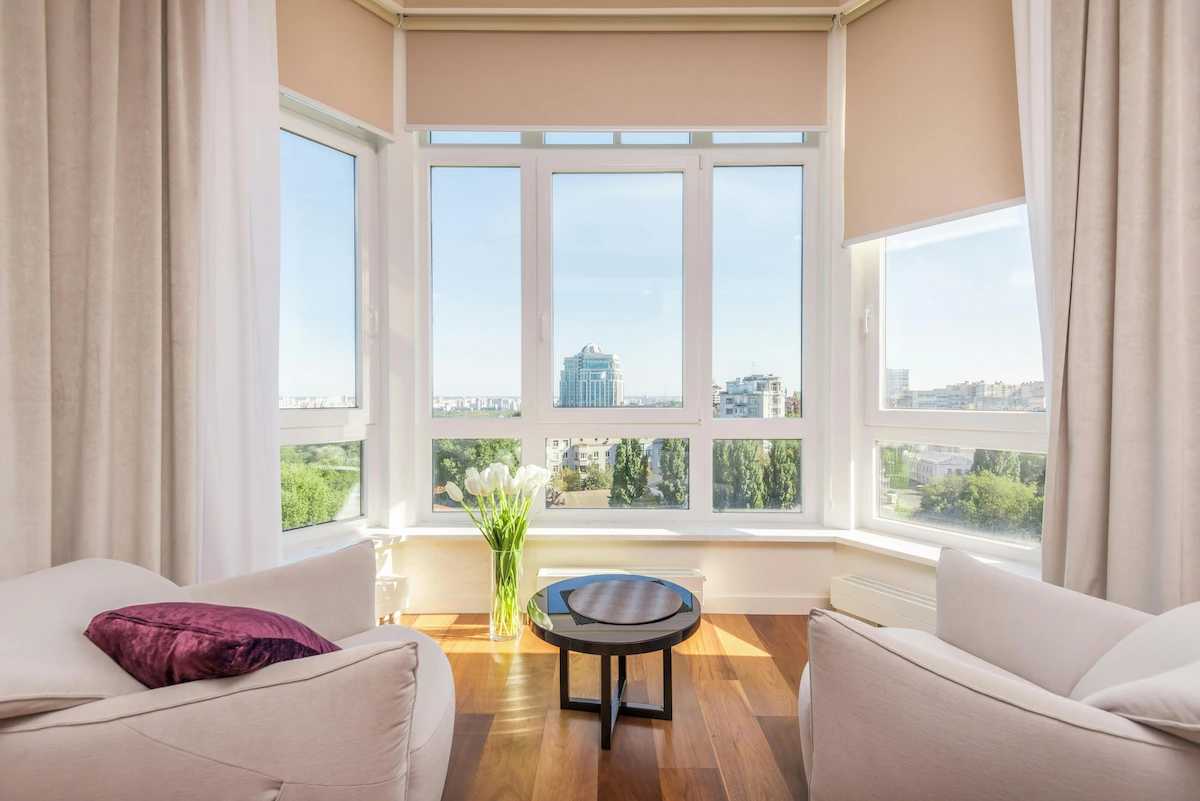
For foreign property owners in Antalya — whether you are managing a holiday rental, preparing a long-term let, or simply creating your own Mediterranean retreat — maximizing natural light is one of the highest-return decisions you can make during a renovation. Bright homes command stronger rental rates, attract better tenants, and require dramatically less artificial lighting throughout the day. With Antalya recording over 300 sunny days per year and an average of 2,900 annual sunshine hours, the potential on your doorstep is extraordinary. The only question is how to capture it effectively.
1. Architectural Interventions: Optimizing Window Size and Placement
The single most impactful change you can make during a natural light renovation in Antalya is to rethink your windows. Many older Turkish apartment buildings and villas were constructed with smaller openings driven by structural convention rather than light planning. A renovation is the ideal moment to revisit that legacy.
Where load-bearing structures permit, enlarging existing window openings — or replacing a solid wall section with a full-height glazed door — can increase daylight penetration by 40–60%. South-facing and west-facing facades deserve the most attention in Antalya, as they receive direct sunlight during the longest portions of the day. For rooms on north-facing elevations, consider high-placed clerestory windows that admit indirect sky light without creating glare or overheating.
- Floor-to-ceiling sliding doors: Perfect for the Mediterranean climate, these dissolve the boundary between interior and balcony or garden, flooding the living room with light and visually doubling the space.
- Thermally broken double or triple glazing: Essential in Antalya's summers. Low-E (low-emissivity) coatings block infrared heat while transmitting visible light, keeping interiors bright without overheating.
- Window placement at eye level and above: Higher-placed openings penetrate deeper into a room than low windows, reaching areas that standard openings cannot.
2. Open-Plan Design: Eliminating Light Barriers
Light travels in straight lines and stops at walls. In the typical Turkish apartment layout, a sequence of closed rooms means that light entering a south-facing living room never reaches the north-facing bedroom corridor. Open-plan renovation directly attacks this problem by removing unnecessary partitions and allowing daylight to flow freely across the entire floor plate.
The most common and effective intervention is opening the wall between the kitchen and the living area. Beyond the obvious social and spatial benefits, this single structural change allows light from kitchen windows or a balcony door to illuminate what was previously a separate, darker zone. The result is a home that feels significantly larger without adding a single square metre of floor area — a compelling argument for rental property owners aiming to justify premium nightly rates.
- Structural assessment first: Always confirm with an engineer which walls are load-bearing before demolition. In Antalya's reinforced concrete frame buildings, most interior partitions are non-structural and can be removed freely.
- Glass partitions as a middle ground: Where acoustic separation is needed (home office, bedroom), frameless glass panels or industrial steel-framed glazing allow light to pass while maintaining room definition.
- Open stairwells and internal voids: In duplex apartments or villas, opening a floor void between levels enables light from upper-story skylights or high windows to cascade down to ground level.
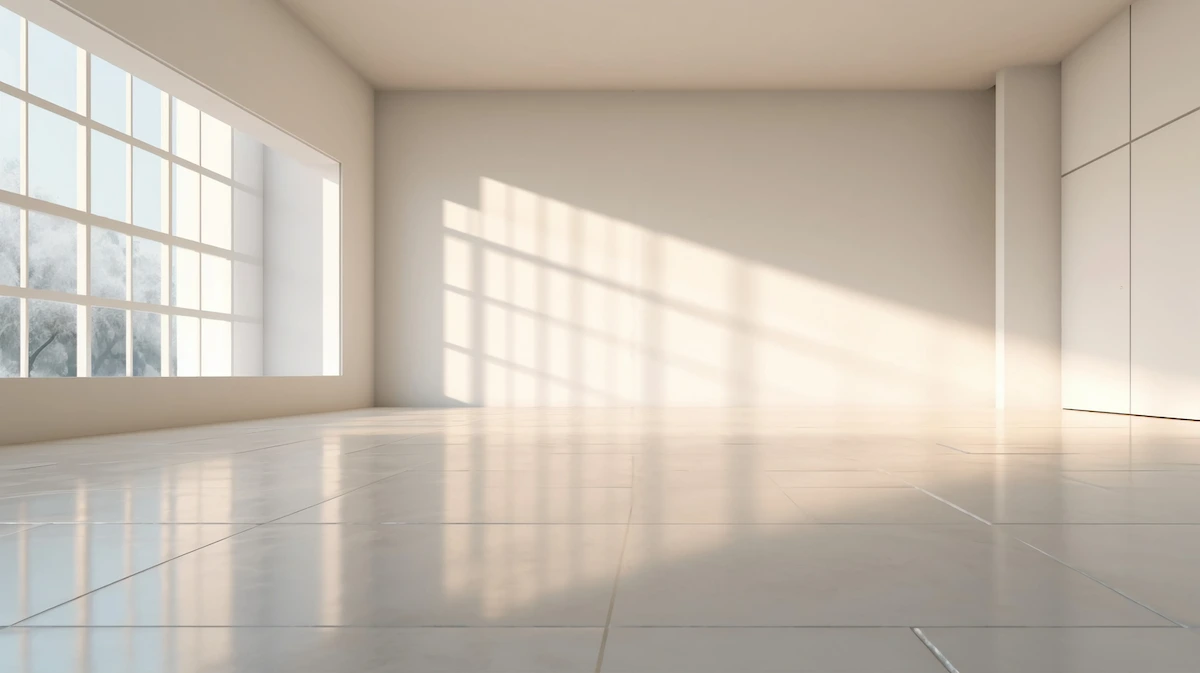 Strategic mirror placement doubles the apparent depth of light and
makes compact interiors feel expansive.
Strategic mirror placement doubles the apparent depth of light and
makes compact interiors feel expansive.
3. Mirror Placement Strategies for Light Amplification
Once you have maximised the amount of daylight entering your home, the next priority is keeping it moving. Mirrors are the most cost-effective tool in the renovation toolkit for achieving this. A well-placed mirror does not merely reflect an image — it bounces photons deep into corners that windows cannot reach, functionally acting as a secondary light source at zero running cost.
The most powerful position for a mirror is directly opposite or at a 45-degree angle to the primary window. In a hallway, a full-height mirror at the far end creates the illusion of another room and amplifies the light admitted by any door or side window. In dining areas and kitchens, a mirrored or high-gloss splashback behind the work surface reflects both natural and artificial light simultaneously, brightening the most-used area of the home without any structural work.
- Oversized floor mirrors (180 cm+): In living rooms, a large leaning mirror adjacent to the main window bounces afternoon sun across the entire space.
- Mirrored wardrobe fronts: In bedrooms, sliding mirrored doors serve double duty: storage and light amplification, particularly effective in compact rooms.
- Reflective ceiling panels or metallic wallpaper: Used sparingly as an accent, these surfaces scatter diffuse light upward and outward, reducing the visual weight of low ceilings.
"In every Antalya renovation project we handle, we treat natural light as a structural resource, not a decorative afterthought. Getting the window, mirror, and colour strategy right at the planning stage costs nothing extra and delivers returns for the entire life of the property."
4. Color Palettes That Maximize Brightness
Light reflection value (LRV) is a measurable property of every paint colour, expressed on a scale from 0 (pure black, absorbs all light) to 100 (pure white, reflects all light). Choosing paints and finishes with high LRV is a zero-cost way to amplify every lumen of daylight you have worked to introduce into your home. A wall painted pure white reflects approximately 80% of incident light; a mid-tone beige reflects around 50%; and a deep charcoal may reflect as little as 10%.
For Antalya properties targeting the holiday rental market, a high-LRV palette has additional commercial value: bright, airy interiors photograph dramatically better for listing platforms, directly improving booking conversion rates. The Mediterranean context also lends itself naturally to white, off-white, and soft sandy tones that resonate aesthetically with international guests.
- Walls: Brilliant white (LRV 85+), warm white, or soft limestone tones. Avoid cool greys in south-facing rooms — they absorb more light than they appear to.
- Ceilings: Always paint ceilings a shade lighter than walls. A white ceiling acts as a secondary reflector, bouncing light from windows back across the room.
- Floors: Polished or semi-gloss large-format ceramic tiles (60×60 cm or larger) in light marble or travertine tones scatter light horizontally across the floor plane, further amplifying brightness.
- Trim and joinery: White or off-white door frames, skirting boards, and window reveals maximise the contrast effect that makes rooms feel wider and taller.
5. Skylight and Light Tube Installation
Windows can only serve rooms that share an external wall. Bathrooms, internal corridors, walk-in wardrobes, and stairwells are chronically dark in the typical apartment or villa layout because they have no facade access. Skylights and light tubes solve this problem by harvesting daylight from the roof and delivering it directly to areas that conventional glazing cannot reach.
In Antalya's climate, a flat-roof skylight installed over a bathroom or internal corridor provides year-round diffuse daylight with virtually no maintenance. Fixed flat skylights are the simplest and most cost-effective option; opening skylights add ventilation, which is especially valuable in bathrooms. For deeper penetration through multiple floors, tubular daylighting devices (light tubes) channel sunlight down a highly reflective tube — as narrow as 25 cm in diameter — from roof to ceiling, delivering the light equivalent of a 100-watt bulb for zero electricity cost during daylight hours.
- Flat-roof skylights: Best for top-floor apartments and villas with flat or low-pitch roofs. Triple-glazed units with thermal breaks prevent condensation and heat gain in summer.
- Pitched-roof rooflights: For villas with sloped roofs, rooflights installed flush with the roof plane admit up to three times more light per square metre than a vertical window of the same size.
- Light tubes (sun tunnels): Suitable for internal bathrooms and corridors, these can be installed in a single day and require no structural work beyond a 25–35 cm ceiling penetration.
For a broader perspective on energy-efficient renovation choices in Antalya, including insulation and sustainable materials that complement your natural light strategy, see our guide on sustainable renovation in Antalya.
6. Energy Savings: How Natural Light Reduces Electricity Bills in Antalya
Antalya's electricity tariffs have risen significantly in recent years, making energy efficiency a pressing financial concern for property owners. Lighting typically accounts for 15–20% of a residential electricity bill in Turkey. By maximizing natural daylight, a well-renovated Antalya apartment can realistically reduce its artificial lighting usage by 60–75% during the eight to ten daylight hours that are relevant for a typical household or rental guest.
The savings compound when you combine natural light optimization with the correct glazing specification. A standard single-glazed window transmits heat freely — in summer, this means air conditioning systems work harder to counteract solar gain, driving up cooling bills. A Low-E double-glazed unit, by contrast, transmits 70–80% of visible light while blocking 60% of solar heat gain. The result is a brighter room that is simultaneously cooler, cutting both lighting and air conditioning costs. For a 90 m² apartment in Antalya operating as a holiday rental, the combined electricity saving from optimised glazing and reduced artificial lighting can amount to 800–1,500 TL per month during peak summer season.
- Lighting cost reduction: Replacing artificial lighting with natural daylight for 8+ hours per day can cut lighting electricity consumption by up to 75%.
- Cooling cost reduction: Low-E glazing reduces solar heat gain by up to 60%, directly reducing air conditioning load — the largest single energy cost in Antalya summers.
- Rental premium: Bright, energy-efficient properties command 10–20% higher nightly rates on platforms such as Airbnb and Booking.com compared to equivalent dark apartments.
- Property value uplift: Natural light is consistently ranked among the top three factors cited by buyers in Antalya's international property market, making it a renovation investment with direct resale return.
7. Smart Artificial Lighting to Complement Natural Light
Even the most expertly renovated naturally lit home requires artificial lighting for evenings, overcast days, and north-facing spaces. The key is to design your artificial lighting system as a seamless complement to daylight rather than a replacement for it — and to deploy smart controls so that artificial light is never burning when natural light is sufficient.
Modern LED lighting technology, combined with simple smart home controls, allows your renovation to achieve this with modest investment. Daylight-responsive dimmers — sensors that measure ambient light levels and continuously adjust artificial output to maintain a target illuminance — are now available at accessible price points and are straightforward to install during a renovation when walls are open and wiring is accessible. For foreign property owners managing Antalya rentals remotely, smart lighting systems also offer the practical benefit of remote control via smartphone app, preventing lights from being left on between guest stays.
- Warm-white LED (2700–3000 K): Matches the quality of Mediterranean afternoon sunlight, creating visual continuity between day and evening lighting modes. LEDs consume 80% less energy than equivalent incandescent bulbs.
- Layered lighting design: Combine ambient ceiling lighting with task lighting (kitchen worktops, reading areas) and accent lighting (architectural features, artwork). This allows flexible, low-energy settings appropriate to each time of day.
- Daylight sensors and dimmers: Automatically step down artificial light output as natural light increases through the morning, then step back up in the evening. This single control strategy can reduce lighting energy consumption by an additional 30–40% beyond the savings from LED conversion alone.
- Motion sensors in corridors and bathrooms: These ensure lights are never left on in spaces that are only occupied briefly, an especially valuable feature for rental properties where guest behaviour cannot be controlled.
For inspiration on how to combine a bright, light-filled interior with the latest design trends popular among international buyers in Antalya, explore our article on decoration trends for Antalya renovations.
At Renovation Antalya, we integrate natural light strategy into every project from the very first design consultation. Whether you are renovating a compact city apartment, a beachside villa, or a long-term rental portfolio, our team will assess your property's orientation, existing openings, and structural constraints to develop a light plan that genuinely transforms your space. Contact us today to discuss how a natural light renovation in Antalya can reduce your running costs, increase your rental income, and create a home that works with the Mediterranean climate rather than against it.