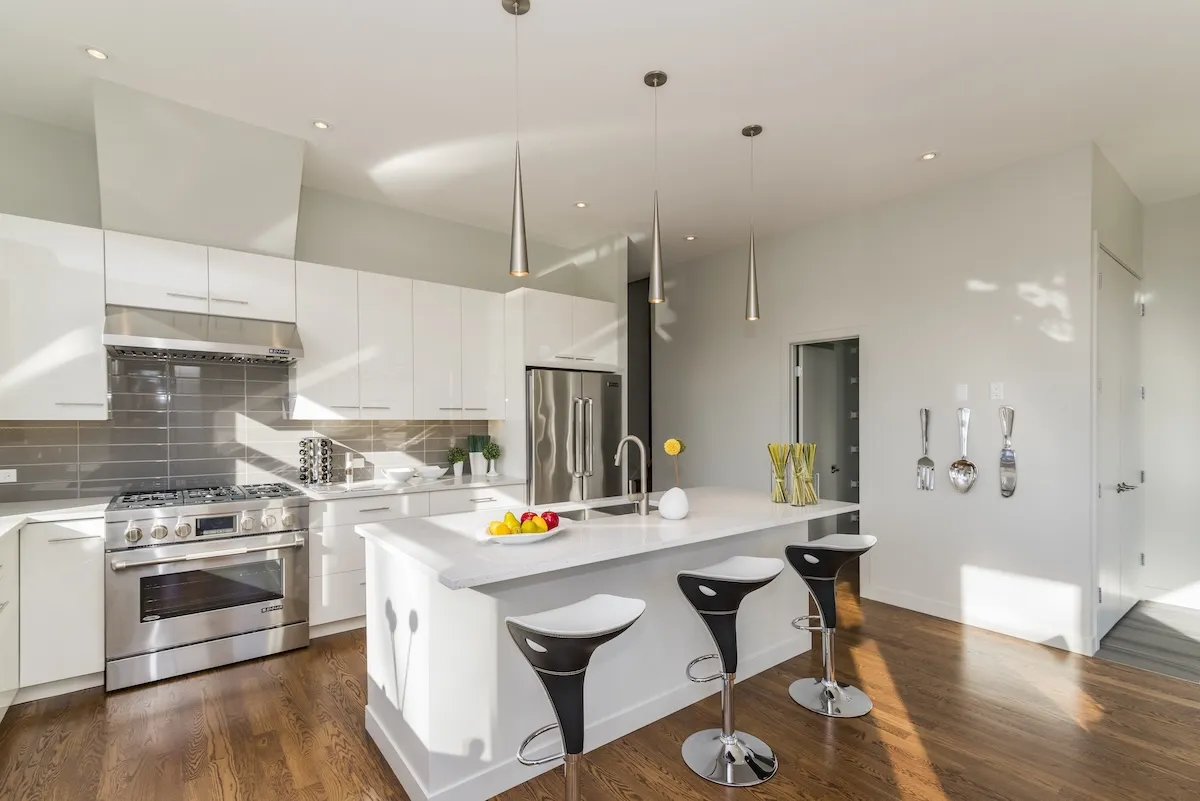
Antalya is one of the rare places on earth where the climate, the landscape, and the architecture align perfectly with a single design philosophy: the Mediterranean way of living. Warm winters, 300-plus days of sunshine a year, and a natural palette of limestone, olive wood, and turquoise water make this city the ideal canvas for a Mediterranean-style kitchen. Whether you are a foreign property owner renovating a holiday villa, an expat settling into permanent residence, or simply someone who wants a kitchen that feels as alive as the coastline outside, this guide covers everything — from design principles and material choices to a realistic cost breakdown for kitchen renovation in Antalya, Turkey.
1. The Mediterranean Kitchen Philosophy: Light, Nature, and Function
The Mediterranean kitchen is not a trend. It is an attitude toward everyday life that has been refined over centuries across coastal Turkey, Greece, Italy, and Spain. At its core, the philosophy rests on three pillars:
- Honesty of materials. Nothing is hidden behind high-gloss lacquer or artificial veneer. Stone looks like stone, wood looks like wood, and terracotta looks like earth.
- Generosity of light. The Mediterranean kitchen does not fight against sunlight — it welcomes it. Layout decisions, window placement, and surface finishes are all chosen to amplify natural light rather than compensate for its absence.
- Continuity with the outside world. The kitchen is not a sealed utility room. It flows toward the garden, terrace, or sea view. Cooking, eating, and gathering are treated as outdoor-indoor activities, not purely indoor ones.
In Antalya specifically, these principles take on a local flavour. The region has its own vernacular architecture — whitewashed plaster walls, carved wooden shutters, hand-painted Iznik-style tiles, and locally quarried travertine stone — that enriches the international Mediterranean palette with something distinctly Turkish. A well-executed Mediterranean kitchen renovation in Antalya draws on both sources, creating a space that feels rooted in place rather than imported from a design magazine.
2. Play of Light and Space: Windows, Open Shelving, and Layout
The single most transformative investment in a Mediterranean kitchen renovation is not the countertop or the cabinetry — it is the way light moves through the room. In Antalya, with its extraordinary solar hours, getting this right should be the first decision on any renovation plan.
- Enlarge the windows. If your kitchen has a south- or west-facing wall, replacing a standard window with a wider, double-glazed unit or a floor-level casement window can completely change the room's character. In Antalya's climate, quality thermal insulation and UV-filtering glass are essential to keep the heat manageable in summer.
- Open shelving instead of upper wall units. Replacing solid upper cabinets with open shelves made from solid oak, reclaimed pine, or powder-coated iron brackets immediately lightens the visual weight of the kitchen. Display everyday items — ceramic bowls, glass jars of herbs and spices, olive oil bottles — to create a lived-in, Mediterranean still-life quality.
- Work with white and cream as your base. Paint walls and main cabinet fronts in off-white, warm cream, or very pale limestone. These tones bounce light around the room and create the spacious, airy feeling that defines Mediterranean style kitchen design.
- Consider a kitchen island or breakfast bar. In larger kitchens, a central island made from solid wood or rough-cut stone adds a social focal point and improves the workflow. It also gives you a surface that can be finished differently from the perimeter countertops, adding depth and visual interest.
- Use under-cabinet lighting. Warm LED strip lighting under open shelves mimics the warm glow of candlelight and enhances the sense of depth in the evenings.
3. Natural and Durable Surfaces: Stone, Wood, and Ceramics
Material selection is where a Mediterranean kitchen renovation either succeeds or fails. Antalya's hot, humid summers and mild but occasionally damp winters mean that materials must not only look beautiful — they must perform over decades. The good news is that the most durable materials are also the most authentically Mediterranean.
- Natural stone flooring. Travertine, marble, and limestone have been used in Turkish kitchens for centuries. In an Antalya kitchen, honed (matte) travertine tiles in honey, walnut, or ivory tones are an excellent choice: cool underfoot in summer, easy to clean, and visually timeless. Sealing the surface annually protects against staining.
- Handmade ceramic wall tiles. A ceramic or zellige-style tile backsplash in white, cobalt blue, or a mix of hand-painted motifs is one of the most cost-effective ways to inject Mediterranean character. Antalya has excellent local tile suppliers, and Turkish-made ceramic tiles represent outstanding value compared to imported equivalents.
- Solid wood for accents. Exposed ceiling beams, open shelving, a butcher's block island surface, or solid wood drawer fronts bring warmth and organic texture. Oak, chestnut, and olive wood are all available locally at reasonable prices.
- Matte cabinet fronts with a tactile finish. Avoid high-gloss lacquer. A slightly veined, chalky, or lightly brushed finish on cabinet doors reads as honest and handcrafted, in keeping with the Mediterranean aesthetic.
 Granite or quartz countertops offer lasting durability with a natural look.
4. Color Palette: White, Sea Blue, Terracotta, and Earthy Tones
One of the joys of Mediterranean style kitchen design is that the color palette is both generous and forgiving. You are essentially borrowing from the landscape itself: the white of the limestone cliffs, the deep turquoise of the Antalya bay, the warm rust of terracotta rooftops, and the dusty sage of olive groves.
- Start with a white or near-white base. Walls, ceiling, and main cabinet fronts in warm white (slightly off-white, never clinical bright white) form the canvas against which everything else sings.
- Add sea blue as the accent colour. Cobalt blue, Aegean turquoise, or a muted navy can appear in tile details, painted lower cabinet units, cushion covers, or kitchen textiles. A single run of hand-painted blue and white tiles behind the hob is often all that is needed.
- Introduce terracotta for warmth. Terracotta pots on open shelves, a terracotta tile floor border, or even a terracotta-painted kitchen island base prevent the space from feeling too cool or Scandi. This is the tone that anchors the palette to the Turkish landscape specifically.
- Use earthy greens and ochres sparingly. Sage green cabinet panels, an ochre-yellow splashback tile, or a dried herb arrangement in an aged copper jug are small additions that enrich the palette without overwhelming it.
- Let natural materials provide their own colour. Travertine flooring, a walnut wood countertop, and a copper undermount sink each bring their own warm, complex tones to the room. Trust the materials — they do most of the work.
5. Outdoor Integration: Connecting Your Kitchen to a Terrace or Garden
"When designing a kitchen in Antalya, we must minimize the line separating the interior and exterior. The kitchen, like the Mediterranean sun, should warm every corner of the home."
In Antalya, the kitchen-to-terrace connection is not a luxury feature — it is the defining characteristic of a home that truly takes advantage of its location. With the right design decisions, you can effectively double the usable space of your kitchen by extending it onto a covered or semi-covered outdoor dining area.
- Floor-to-ceiling sliding glass doors. A wide bifold or sliding door system between the kitchen and the terrace eliminates the physical and visual barrier between inside and outside. In mild weather — which in Antalya means most of the year — you can cook with the doors fully open, letting breezes through and making the terrace a natural extension of the kitchen worktop.
- Continue the flooring level. Using the same stone tile inside and outside, with a seamless threshold, creates the impression of one uninterrupted space. This is one of the most powerful visual tricks in Mediterranean interior design.
- Build an outdoor kitchen corner. Even a modest outdoor area with a built-in gas grill, a small prep surface, and a wall-mounted shade sail transforms summer entertaining. Antalya's long outdoor season makes this investment highly practical.
- Plant a frame around the opening. Bougainvillea, jasmine, or lemon trees trained around the door frame reinforce the sense that inside and outside are part of the same living space, and add the characteristic scent of the Mediterranean to your kitchen.
6. Rustic Details with Modern Appliances
A common misconception about Mediterranean kitchen renovation is that it means sacrificing modern convenience for aesthetic authenticity. In reality, the most successful examples achieve both: the kitchen looks and feels traditional, but it functions with the full efficiency of a contemporary space. The key is to conceal technology rather than celebrate it.
- Fully integrated appliances. Refrigerators, dishwashers, and ovens concealed behind matching cabinet doors preserve the clean, handcrafted look of the kitchen. What you see is wood, stone, and ceramic — not stainless steel panels.
- Copper and aged brass fittings. Tap fittings, drawer handles, and light switch plates in copper or brushed brass add a warm, aged quality that stainless steel cannot. In Antalya, copper is a historically significant material with a strong local craft tradition.
- Pendant lighting with character. Hang forged iron, rattan, or hand-blown glass pendant lamps over the island or dining table. These are the jewellery of the kitchen — visible, sculptural, and immediately evocative of Mediterranean tavernas and old market streets.
- Undermount ceramic or copper sink. A large, deep, undermount sink in ceramic white or hammered copper is both functional and a focal point. Pair it with a lever-style brass tap for maximum authenticity.
- Induction hob under a stone hood. A modern induction hob set into a stone countertop, with a handcrafted stone or plaster range hood above it, is the perfect metaphor for the entire Mediterranean kitchen approach: new technology, dressed in ancient materials.
7. Mediterranean Kitchen Countertop Guide: Travertine, Granite & Quartz
The countertop is the most used surface in any kitchen, and in a natural stone kitchen in Antalya it is also the most visible expression of the design philosophy. Choosing the right material involves balancing aesthetics, maintenance requirements, and budget. Here is a practical comparison of the three most popular options for Mediterranean kitchen renovation in Antalya:
Travertine
Travertine is the quintessential Mediterranean stone — quarried extensively in Turkey (Denizli province is among the world's largest producers), with a warm ivory, honey, or walnut tone and a natural pitting that gives it an aged, artisanal quality. In Antalya, locally sourced travertine is competitively priced and carries the added value of being genuinely regional.
- Pros: Authentic Mediterranean look, locally available, unique natural variation in each slab, comfortable to work on, good heat resistance.
- Cons: Porous — requires annual sealing to resist staining from olive oil, wine, and citrus. The natural pitting can trap food debris if not filled (choose "filled and honed" travertine for kitchen use). Softer than granite and can scratch.
- Best for: Kitchens where an imperfect, lived-in patina is embraced as part of the character. Excellent for islands and dining areas with lighter use.
Granite
Granite is one of the hardest natural stones available and is a popular choice for kitchen worktops in Antalya renovation projects. It comes in a wide range of colour variations, including creams and golds that complement the Mediterranean palette well.
- Pros: Extremely hard and scratch-resistant, heat-resistant, low porosity compared to travertine, long lifespan, many colour options.
- Cons: Still requires periodic sealing. Some granite colours and patterns can feel more commercial than artisanal. Heavier than quartz composites, requiring stronger cabinet support.
- Best for: High-traffic kitchens where durability is the priority. Particularly good as a main cooking and prep surface.
Quartz (Engineered Stone)
Engineered quartz composites (brands such as Silestone, Caesarstone, and their Turkish equivalents) are the most practical option for a busy kitchen. They are manufactured to replicate the look of natural stone while eliminating its maintenance demands.
- Pros: Non-porous — no sealing required. Highly consistent appearance. Resistant to staining, scratching, and bacteria. Wide range of finishes including matte and textured surfaces that read as natural stone.
- Cons: Less heat-resistant than granite or travertine (use trivets). Does not develop the same natural patina over time. The look, while convincing, is not identical to natural stone.
- Best for: Families with young children, rental properties, or anyone who wants a low-maintenance Mediterranean aesthetic without sacrificing the natural stone look.
Our recommendation for most Mediterranean kitchen renovation projects in Antalya: use quartz for the main perimeter worktop (practicality) and travertine or marble for the island surface (aesthetics), giving you the best of both worlds.
8. Cost Guide: Mediterranean Kitchen Renovation in Antalya
One of the most common questions we receive from foreign property owners planning a kitchen remodel in Antalya is: what will it cost? Prices in Turkey have fluctuated significantly in recent years, but Antalya continues to offer excellent value compared to equivalent renovation work in Western Europe or the UK. The figures below reflect typical market rates as of late 2024 and should be used as planning estimates rather than fixed quotes.
Budget Tier: Essential Mediterranean Update (from €3,500)
A budget renovation focuses on maximum visual impact with targeted changes: repainting walls and cabinet fronts, replacing handles and tap fittings, adding a new tile backsplash, installing open shelves, and introducing Mediterranean accessories and lighting. This level of work can transform the feel of a kitchen without touching the underlying layout, plumbing, or electrical systems.
- Cabinet repainting and new handles: €600–€1,200
- Handmade ceramic tile backsplash (supply and install): €400–€900
- Open shelving (solid wood, 3–4 units): €300–€700
- New pendant lighting: €200–€500
- Tap, sink, and minor plumbing update: €400–€900
- Accessories, plants, textiles: €200–€500
Mid-Range Tier: Full Surface and Fixture Renovation (€8,000–€18,000)
A mid-range kitchen renovation in Antalya typically includes new cabinet carcasses and fronts, a natural stone countertop (travertine or granite), new flooring, full tile work, new appliances, and updated lighting. The layout remains broadly the same but every surface is replaced.
- New kitchen units (Turkish manufacture, solid quality): €2,500–€6,000
- Natural stone countertop (travertine or granite, per linear metre): €150–€350
- Travertine floor tiles (supply and install, per m²): €40–€90
- Handmade tile backsplash (full): €800–€2,000
- New appliances (integrated): €1,500–€4,000
- Lighting, tap, sink, plumbing: €600–€1,500
- Labour and project management: €1,500–€3,500
Premium Tier: Full Mediterranean Kitchen Transformation (€20,000+)
A premium project involves architectural changes — moving walls, enlarging windows, installing bifold doors to the terrace, relocating plumbing, building a stone range hood, adding an outdoor kitchen area, and specifying the finest local materials including hand-carved marble, custom joinery, and bespoke ceramic tiles. These projects are typically planned over 2–4 months and managed by an Antalya renovation company with full design and build capability.
What Affects the Final Price?
- Kitchen size. A compact apartment kitchen (under 10 m²) costs proportionally less than a large open-plan villa kitchen (25 m²+).
- Layout changes. Moving the sink, hob, or refrigerator requires replumbing and electrical work, adding €1,000–€3,000 to the budget.
- Window or door enlargement. Structural work to widen a window or install a new sliding door to a terrace adds €1,500–€5,000 depending on the wall construction.
- Material origin. Locally quarried Turkish travertine is significantly less expensive than imported Italian marble. Both are beautiful; only the provenance and price differ.
- Seasonal pricing. Renovation costs in Antalya can be slightly lower in winter (November–March) when demand from the construction sector is reduced.
As Renovation Antalya, we offer free on-site consultations and detailed project quotations for all kitchen renovation projects, whether you are planning a modest cosmetic update or a full architectural transformation. We work with foreign property owners and expats regularly, providing bilingual project management and transparent pricing throughout the process.
Ready to begin planning your Mediterranean kitchen renovation in Antalya? Explore our related guides on kitchen renovation costs and planning in Antalya and the latest decoration trends for Turkish homes, or contact us directly for a free site survey tailored to your property.