
A kitchen renovation is both a significant investment and a process that directly affects the quality of your daily life. Careful planning and attention to detail are what stand between a kitchen you love for decades and one that frustrates you within a few years. Antalya's Mediterranean lifestyle shapes kitchen design in distinctive ways: wide, light-filled, open-plan kitchens sit at the center of social life. Whether you are undertaking a full kitchen remodel in Turkey or simply refreshing an existing space, this guide covers everything you need to know about kitchen renovation in Antalya — from ergonomics and materials to kitchen design and kitchen renovation cost.
Planning and Ergonomic Layout
Before a kitchen renovation begins, clarifying your needs and expectations is critical. Poor planning leads to expensive corrections later. The most common mistakes — insufficient countertop space, awkward traffic flow, hidden dead corners — are all avoidable with deliberate design:
- The kitchen triangle: The "work triangle" connecting the refrigerator, sink, and stove is the backbone of kitchen ergonomics. Each side should ideally measure between 1.2 and 2.7 metres. Too short creates a cramped, chaotic workspace; too long means unnecessary steps with every meal. For a kitchen design in Antalya that suits the local lifestyle of frequent cooking and entertaining, balance is everything.
- Countertop length: A single-cook kitchen benefits from at least 2–3 metres of continuous worktop. If two people regularly cook together, plan for 4 metres or more. L-shaped and U-shaped kitchen layouts naturally improve workflow by creating distinct zones for prep, cooking, and cleanup.
- Corridor width: Allow a minimum of 90 cm of clear passage for single-person use. If two people will often be in the kitchen simultaneously, 120 cm is the minimum. Cabinet door swing directions directly affect this calculation and are easy to overlook until it is too late.
- Kitchen island and bar counter: In open-plan homes — the dominant style for renovations in Antalya — a kitchen island adds both workspace and a casual seating point for guests. A well-proportioned island becomes a natural focal point that bridges the kitchen and living areas, perfectly suited to the Mediterranean social lifestyle.
- Waste and recycling: One of the most frequently skipped details in kitchen planning is bin placement. Under-sink pull-out systems, door-mounted solutions, and dedicated recycling drawers keep the space tidy and functional. Plan this before cabinet fabrication, not after.
Material Selection
Materials used in a kitchen must be durable, water-resistant, and heat-resistant. Antalya's humid Mediterranean climate makes material selection even more important than in cooler, drier regions. Choosing the wrong materials here accelerates wear and creates maintenance headaches:
- Cabinet door fronts: MDF-lam (matte or gloss), acrylic, lacquer, and membrane wraps are the main options. Gloss surfaces look striking but show fingerprints; matte finishes are more forgiving in daily use. Bare (uncoated) MDF carries a long-term risk of swelling and peeling in humid kitchens — always insist on a proper paint or laminate finish.
- Cabinet carcass: Opt for at least 18 mm thick melamine-coated particleboard or MDF. In areas that may get wet — under the sink, near the dishwasher — use moisture-resistant (MR) board. Cutting corners here is one of the most common causes of cabinet failure within 3–5 years in coastal Turkish properties.
- Floor covering: Non-slip and easy-to-clean ceramic or porcelain tile is the most practical choice. Water-resistant LVT or SPC flooring is a comfortable alternative with good acoustic properties. Traditional laminate flooring is not recommended for kitchens due to long-term swelling risk from moisture and spills.
- Backsplash: The wall area behind the hob and sink must withstand heat and frequent splashing. Options include ceramic or porcelain tile, glass mosaic, full glass panels, or stainless steel. Large-format glass panels offer the easiest cleaning and a clean, contemporary look that suits modern kitchen design in Antalya.
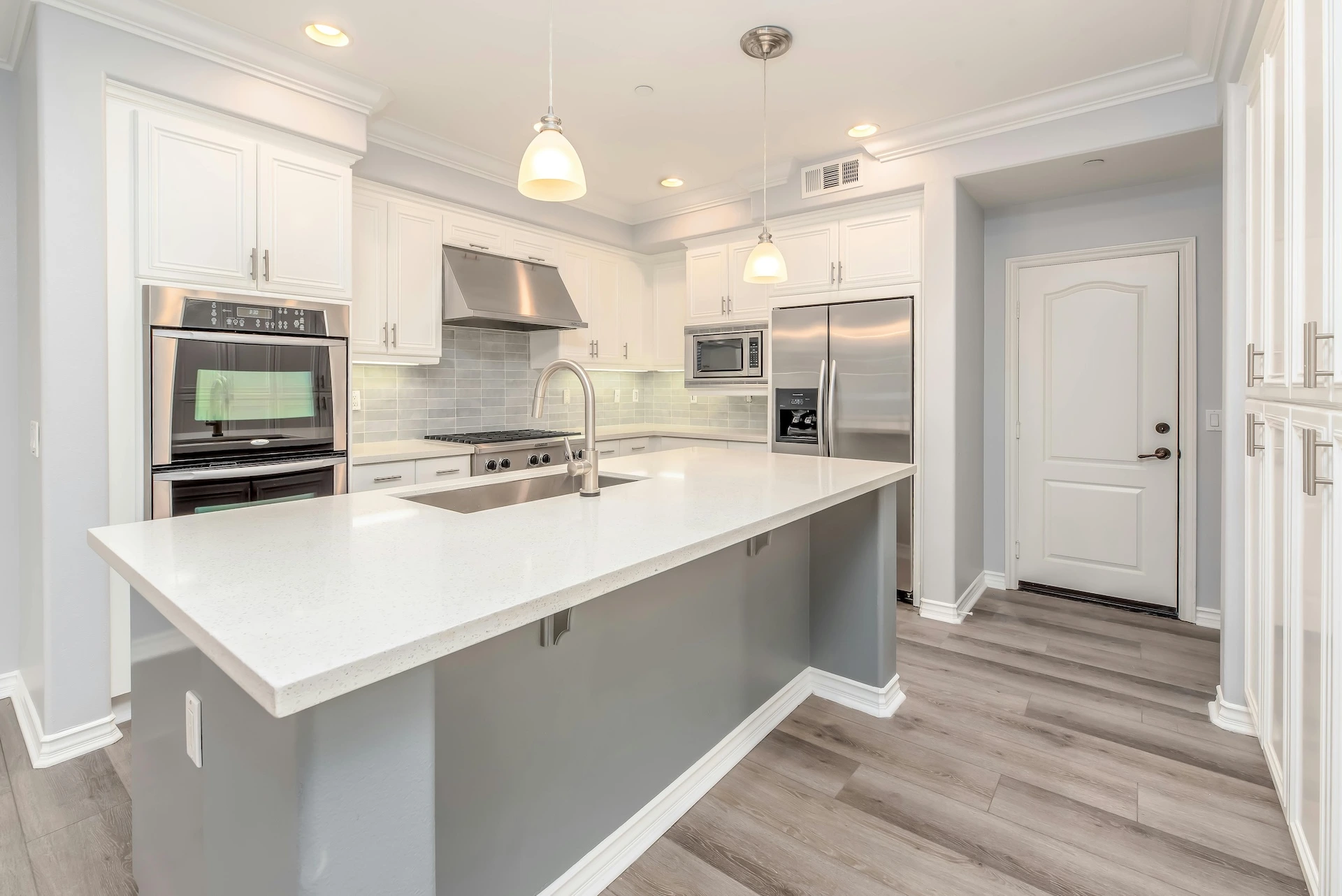 The harmony of natural materials and smart storage solutions in a
kitchen renovation.
The harmony of natural materials and smart storage solutions in a
kitchen renovation.
Countertop Selection and Comparison
The countertop is the most heavily used surface in the kitchen. For a kitchen remodel in Turkey, durability matters as much as aesthetics — and with Antalya's climate, UV stability is an added consideration for outdoor kitchen areas. Here is a practical comparison of the main options:
- Granite: Natural stone with high heat and scratch resistance. Local granite varieties sourced from the Antalya region are both aesthetically distinctive and cost-effective compared to imported stone. Granite does require annual sealing with a stone sealer to prevent staining, but the maintenance is straightforward and infrequent.
- Quartz (engineered stone): Manufactured from crushed quartz and resin, quartz offers a more uniform appearance than natural granite. Its non-porous surface means it does not stain and requires no sealing — a significant practical advantage for busy kitchens. One caveat: avoid placing very hot pans directly on quartz as the resin binders can be damaged by sustained heat above 150°C.
- Compact laminate (Dekton, Neolith): Ultra-thin sintered stone panels offer exceptional resistance to scratches, heat, and UV radiation. They can be used consistently across countertops, flooring, and cabinetry fronts for a unified look. This is an excellent choice for outdoor kitchens in Antalya villas where sun exposure is intense.
- Marble: Undeniably luxurious in appearance, but marble is acid-sensitive — lemon juice, vinegar, and wine will etch and stain the surface over time. For families with heavy daily kitchen use, marble demands consistent attention. It is better suited to lower-traffic areas or statement island tops where its visual impact can be appreciated.
- Stainless steel: Professional kitchen aesthetics, fully hygienic, and heat-proof. The downsides are visible fingerprints and surface scratches. A strong choice for industrial or minimalist kitchen design where practicality takes precedence over softness.
Plumbing and Ventilation
The kitchen concentrates water supply, drainage, and gas lines in a single compact area. During a kitchen renovation, these systems deserve careful attention — errors here are costly to fix after cabinetry is installed:
- Water supply and drainage: Position water and waste pipes to match the planned locations of the sink and dishwasher before any cabinets go in. A slow-draining sink is the most common symptom of a waste pipe with insufficient fall angle or a partial blockage — both are preventable with correct installation. If you are relocating the sink during a kitchen remodel, budget for a licensed plumber to reroute the lines correctly.
- Gas supply: Many properties in Antalya are connected to the natural gas network. Any modification or extension of a gas line requires a licensed gas technician — unauthorized work on gas installations is illegal in Turkey and creates serious safety risks. Always verify gas connections are pressure-tested and certified before closing up walls.
- Electrical wiring: High-draw appliances — dishwasher, oven, hob, and refrigerator — each need a dedicated earthed circuit. Plan the number and height of countertop outlets before cabinets are ordered, as adding sockets after installation is expensive. Consider multi-socket outlet modules with USB-A and USB-C ports built in; they are increasingly standard in modern kitchen design in Antalya and throughout Turkey.
- Range hood and ventilation: Effective removal of cooking vapors and odors is non-negotiable, especially in the open-plan kitchens that dominate Antalya renovations. A ducted (externally vented) hood is significantly more effective than a recirculating model with charcoal filters. Choose a hood with a minimum extraction capacity of 600 m³/hour; for larger hobs or island installations, 800 m³/hour or above is recommended.
Lighting Design
Kitchen lighting serves two purposes: safety while working and atmosphere for living. A well-lit kitchen in Antalya's bright, social homes should feel welcoming at any time of day, and light layering is the key to achieving that:
- General (ambient) lighting: Recessed ceiling spotlights or flush LED panels provide even base illumination across the kitchen. Target 400–600 lumens per square metre depending on ceiling height. This is your foundational layer — it should eliminate dark corners without creating harsh glare.
- Task lighting: LED strip lights or under-cabinet fixtures mounted beneath wall units eliminate shadows on the countertop while you chop, read recipes, or handle hot pans. This is one of the most cost-effective upgrades in any kitchen renovation and dramatically improves both safety and usability.
- Island and bar pendant lighting: Pendant fixtures suspended above a kitchen island serve both functional and decorative purposes. Two or three pendants in a coordinated style create a visual anchor point and reinforce the island as a social hub. This detail appears in virtually every high-end kitchen remodel in Antalya.
- Cabinet interior lighting: LED sensor lights inside deep larder cupboards and pantry units add everyday convenience. They are inexpensive to install during renovation and virtually impossible to retrofit cleanly afterwards — worth planning in from the start.
Smart Storage Solutions
Turkish kitchens, even in larger Antalya properties, often have limited floor area relative to the volume of equipment and ingredients that need to be stored. Smart storage transforms a frustrating space into an efficient one:
- Corner cabinet solutions: Blind corners are wasted space. Replace them with a Lazy Susan rotating carousel, a "magic corner" pull-out system, or an internal drawer carousel. Each solution makes the full depth of a corner cabinet accessible without awkward reaching or crouching.
- Full-drawer lower cabinets: Replacing fixed shelves in base units with deep drawers is one of the highest-impact changes in kitchen design. Drawers allow you to see and access everything at a glance rather than rummaging at the back of a shelf. The additional cost over standard shelving is modest relative to the daily convenience gained.
- Tall larder units: Floor-to-ceiling larder cabinets provide exceptional storage volume for dry goods, small appliances, and rarely used items. A pull-out step or retractable step stool makes upper shelves practical rather than theoretical. In Antalya apartments where square footage is at a premium, a well-configured tall larder can replace the need for a separate storage room.
- Open shelving: A run of open wall shelves above the countertop for frequently used spices, oils, and utensils both speeds up cooking and adds a decorative element. Open shelving is a natural fit with Antalya's Mediterranean kitchen culture — terracotta pots, olive oil, fresh herbs — and keeps essentials within easy reach while freeing wall cabinet space for items used less often.
Appliance Selection and Integration
Appliances are part of the design, not an afterthought. In a kitchen renovation or kitchen remodel, deciding on appliances before cabinetry is ordered is essential, as cabinet dimensions must accommodate specific models:
- Integrated (built-in) appliances: Built-in refrigerators, dishwashers, and ovens hidden behind matching cabinet fronts give a kitchen a seamless, high-end appearance. This approach is standard in upper-segment kitchen design in Antalya and adds measurable value to a property, which is relevant if you are renovating an Airbnb or investment apartment.
- Energy rating: A+++ rated appliances carry a higher upfront cost but deliver meaningful savings on electricity and water over their lifespan. The return on investment is typically 3–5 years. In Turkey, where energy prices have risen significantly, the efficiency premium is increasingly easy to justify.
- Low-noise models: In open-plan kitchen-living spaces — the default layout in most modern Antalya renovations — a dishwasher rated below 44 dB and a refrigerator with low compressor noise make a noticeable difference to the comfort of an evening in the adjacent living room. This is a detail that clients rarely think to ask about until they have lived with a noisy appliance for a year.
Kitchen Renovation Cost
Kitchen renovation cost in Antalya varies widely depending on the scope of work and the quality of materials chosen. Understanding the main cost tiers helps in setting a realistic budget and identifying where spending more delivers genuine value:
- Cabinet door and countertop refresh: Replacing only the door fronts and fitting a new countertop is the most economical renewal option. If the existing carcasses are structurally sound, this approach achieves a dramatically different look at a fraction of the cost of a full kitchen remodel. It is ideal for homeowners who are happy with their current layout and storage configuration.
- Full cabinet system replacement: New carcasses, door fronts, countertop, sink, and tap — this mid-range kitchen renovation delivers a completely new kitchen with updated storage and an improved finish, without touching the existing tiling, flooring, or services.
- Comprehensive full renovation: Plumbing relocation, new flooring, ceiling works, full lighting redesign, custom cabinet system, premium countertop, and appliance integration — this is the full-scope project that transforms the kitchen entirely. Kitchen renovation cost at this level in Antalya depends heavily on the size of the space, material specifications, and the extent of structural or services work required.
Across all budget levels, the elements that deliver the greatest long-term value are the same: ergonomic layout, a quality countertop, and a durable cabinet system. The brand of the dishwasher or the style of the tap handles matters far less than getting these three fundamentals right. Investing here — rather than in premium appliances alone — consistently produces better outcomes for homeowners undertaking kitchen renovation in Antalya or elsewhere in Turkey.
"A kitchen renovation is not just an update — it is an investment that makes your life easier every single day. Your attention to detail now determines your long-term comfort."
Getting professional support for your kitchen renovation provides significant advantages in both time and cost management. As Renovation Antalya, we work with homeowners, villa owners, and property investors throughout Antalya and the surrounding region to design and deliver the kitchen they have always wanted. Contact us for a free site visit and consultation.