In kitchen renovation projects, the question we hear most often is: "Should we go lacquered or wood veneer?" Both systems are staples of the premium segment, yet they differ in look, touch, durability and budget. The right answer depends on your lifestyle and how you use your kitchen — and in more and more projects, the answer is "both".
What Is a Lacquered Kitchen?
A lacquered kitchen uses MDF fronts that are primed, sprayed with multiple coats of paint, oven-cured and finished in gloss, matte or silk-matte. The surface is pure paint — which means unlimited colour freedom:
- Gloss lacquer: A mirror-like reflective surface that multiplies light and makes small kitchens feel larger. Modern and luxurious — though fingerprints and micro-scratches show more readily on gloss.
- Matte lacquer: By far the most requested finish of recent years. It diffuses light softly, hides fingerprints well and delivers a calm, sophisticated look.
- Soft-touch lacquer: New-generation anti-fingerprint surfaces with a velvet-like feel — spreading fast in premium projects.
- Unlimited colour: Lacquer can be tinted to any RAL or NCS shade. A cabinet that exactly matches your wall colour is only possible with lacquer.
- Freedom of profile: Beyond flat slabs, classic profiled doors and handleless (gola-channel) designs can all be lacquered — paint follows every form.
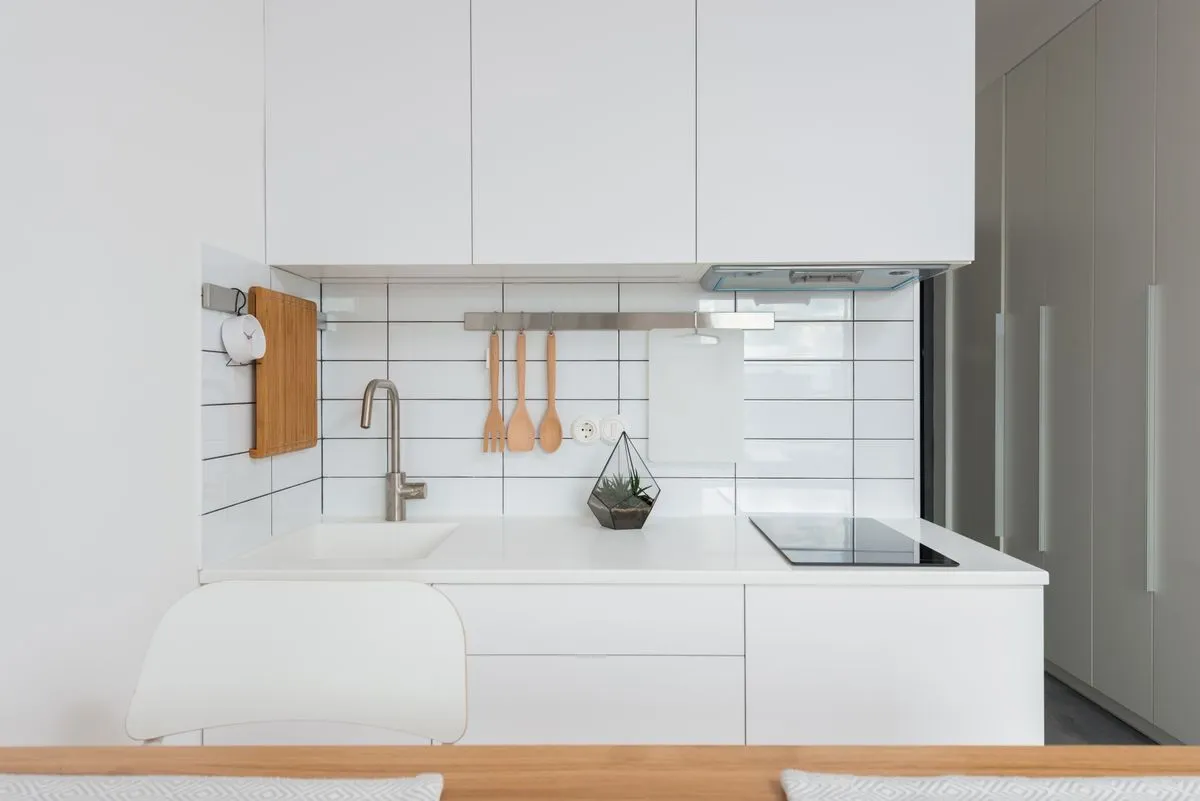 Handleless white lacquered fronts: a seamless surface and an uninterrupted modern line.
What Is a Wood Veneer Kitchen?
In wood veneer kitchens, a 0.5-1 mm leaf of real timber is pressed onto an MDF or particleboard core and protected with lacquer varnish. Every grain line on the surface is real:
- Genuine wood texture: The natural grain of oak, walnut, ash or exotic species is carried straight onto the front. No foil or laminate captures the depth of real veneer.
- A warm, organic atmosphere: Wood veneer brings a natural calm to the kitchen. In open-plan living spaces it merges seamlessly with furniture for a timeless look.
- Grain-matched design: Horizontal or vertical grain flowing uninterrupted from door to door (sequence matching) is the signature of top-tier kitchens — and demands craftsmanship.
- Every front unique: As a natural material, no two veneer doors are ever identical; your kitchen becomes literally one of a kind.
- Varnish protection: Modern UV varnishes protect the veneer against moisture, stains and fading — in matte, silk-matte or open-pore (natural-touch) options.
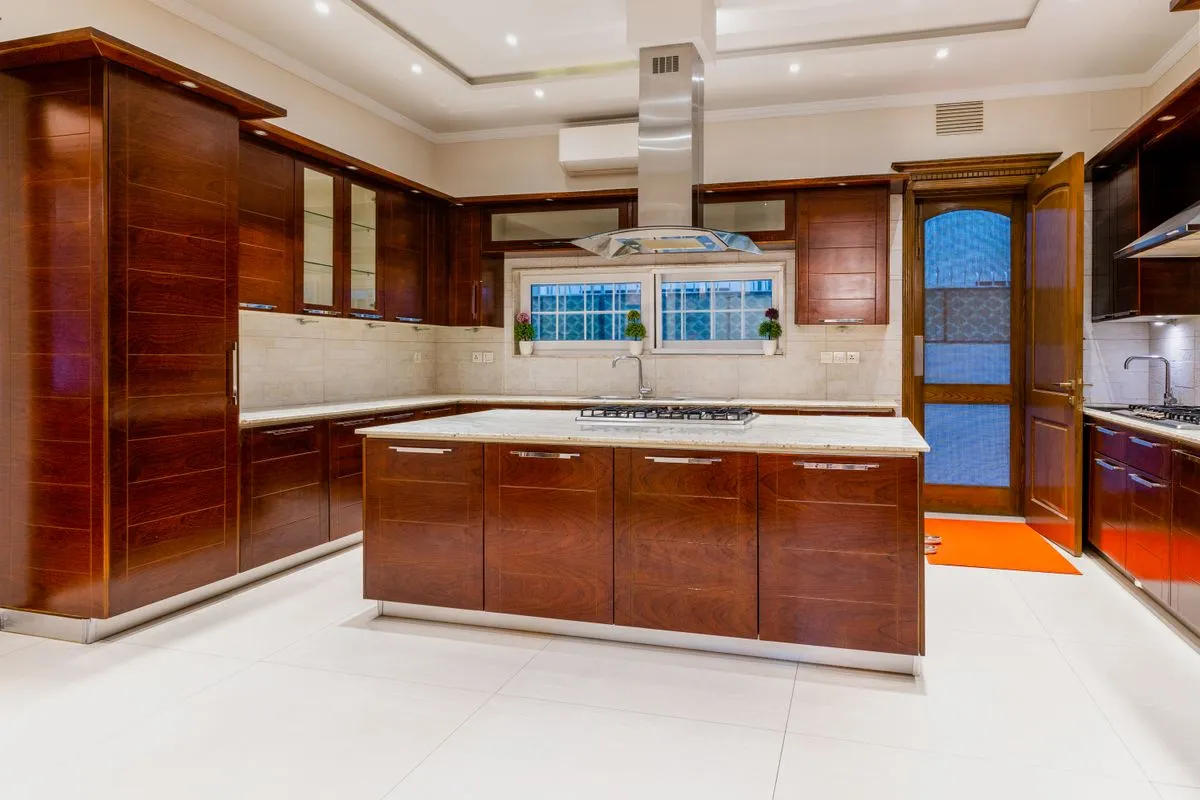 Real wood veneer fronts: the depth of natural grain and a prestigious presence.
Lacquer vs Veneer: The Comparison
Let's put the strengths and weaknesses of the two systems side by side:
- Look: Lacquer offers a flawless, homogeneous surface — the choice of colour-driven, modern designs. Veneer offers texture and character — the choice of natural, warm, organic spaces.
- Durability: Quality lacquer stands up very well to daily use but can chip under point impacts. Veneer is more forgiving of small scratches; the grain hides marks naturally.
- Repair: Lacquered doors can be repainted — a major advantage. Deep damage to veneer means replacing the door, though surface dullness can be fixed with re-varnishing.
- Cleaning: Both wipe clean easily with a damp microfibre cloth. Gloss lacquer is more demanding about fingerprints; matte lacquer and veneer are more relaxed in daily life.
- Price: Both sit in the premium segment. Standard lacquer and standard oak veneer occupy a similar band; exotic veneers and special-effect lacquers (metallic, pearl) push prices up.
- Relationship with light: Gloss lacquer reflects light and enlarges the space; wood veneer absorbs light and deepens the atmosphere. How much daylight your kitchen receives should steer this choice.
The Trend: Lacquer + Wood Combination
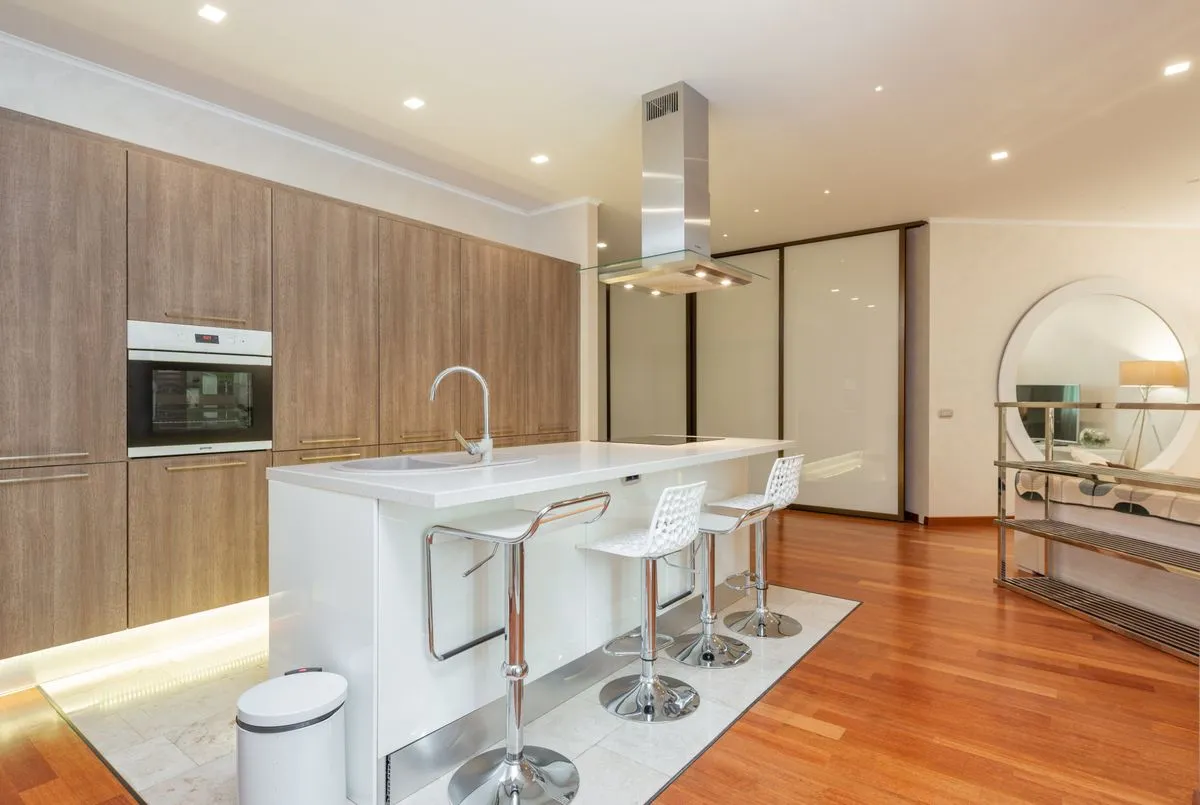
The strongest kitchen trend of recent years is uniting the two materials in one design — just like our cover image:
- Lacquered island, veneer tall units: The most popular combo; a gloss or matte lacquered island gathers light at the centre while a wood veneer tall-unit wall builds warmth behind it.
- Lacquer below, veneer above (or vice versa): Dark matte lacquer base units with light oak veneer wall units bring balance and depth.
- Wood niches: In a lacquer-led kitchen, highlighting a coffee corner or open shelf niche with veneer is a low-cost, high-impact touch.
- Suggested ratio: A 70-30 or 60-40 split reads balanced; equal weighting of the two materials often looks indecisive.
- The worktop bridge: In combination kitchens the worktop ties the materials together: white-cream quartz flatters lacquer, beige-taupe tones bring the veneer forward.
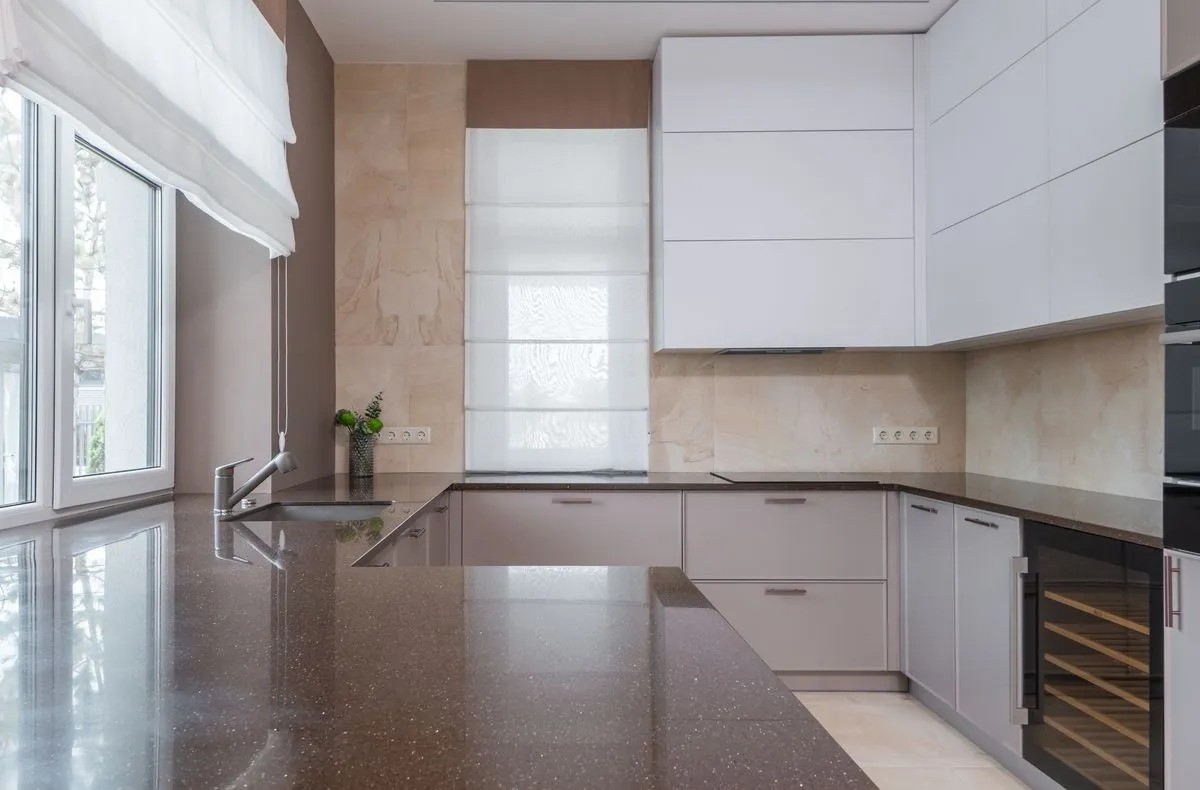 A two-tone matte lacquer scheme: white wall units balanced by taupe base units.
Colour and Texture Trends
Current colour and texture movements in kitchen fronts:
- Warm neutrals: Cream, cashmere, taupe and greige — applied in matte lacquer, this palette that softens the sterility of white has become a modern classic.
- Nature greens: Sage and olive matte lacquered fronts, especially with wood and brass details, bring a calm that suits Mediterranean homes beautifully.
- Midnight blue and anthracite: Dark matte lacquer with gold-brass handles and veined worktops creates a dramatic, luxurious kitchen.
- Light oak and ash veneer: Continuing the Scandinavian influence, light timbers are the most elegant way to keep small and medium kitchens feeling airy.
- Smoked and thermo woods: Heat-treated dark veneers are rising as a walnut alternative and pair tone-on-tone with dark lacquer.
- Two-tone schemes: Light upper and dark lower cabinets deliver visual balance and practical stain management at once.
Kitchen Fronts in Antalya's Conditions
Antalya's hot, humid climate influences material and detail choices for kitchen fronts:
- Moisture resistance: Quality lacquered MDF and varnished real veneer both perform well in humid climates when edges are properly sealed. Edge sealing around the sink and dishwasher deserves special attention.
- UV and yellowing: Cheap lacquer can yellow over time in sunny kitchens; an anti-UV topcoat eliminates the risk. On veneer, UV varnish slows the natural colour shift (oak ambering, walnut lightening).
- Heat sources: Around ovens and hobs, both systems need heat-barrier mounting and aluminium protection profiles; edge lifting on doors in the steam path is the most common service call.
- Air-conditioning effect: In constantly air-conditioned interiors, sudden humidity drops can make solid wood doors move; veneer and lacquer are more stable than solid timber — a key reason they are preferred in Antalya.
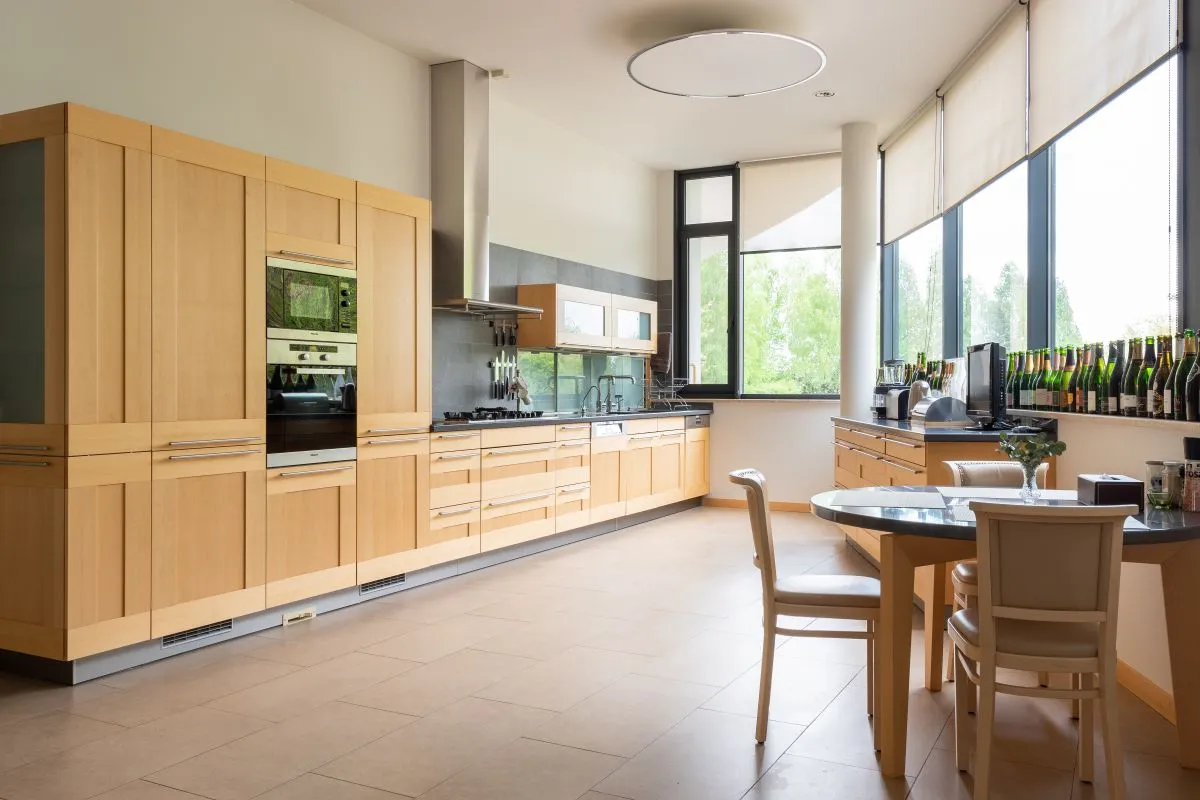 A kitchen in natural timber tones: organic texture in harmony with daylight.
Care and Cleaning
With the right care, both front systems keep their first-day look for years:
- Daily cleaning: A slightly damp microfibre cloth followed by a dry one is enough. Abrasive sponges, powder detergents and bleach leave permanent marks on both surfaces — never use them.
- Stain response: Wipe grease and sauce splashes before they dry. For stubborn stains, warm water with a few drops of pH-neutral washing-up liquid is safe.
- Gloss lacquer care: A fine automotive-type polish once a year hides micro-scratches and refreshes the shine.
- Veneer care: Worn varnish areas can be renewed locally with sanding and re-varnishing. On open-pore surfaces, a yearly maintenance oil feeds the natural look.
- Hinges and runners: Regardless of front system, an annual hinge adjustment and runner clean keeps doors aligned and closing silently.
Which One Is Right for You?
A practical summary to make the decision easier:
- Choose lacquer if: You have a specific colour in mind, want a modern homogeneous look, want to visually enlarge a small kitchen (gloss), or value the flexibility of repainting in the future.
- Choose wood veneer if: You value natural material texture, want unity with furniture in an open-plan space, seek a timeless prestigious look, or prefer a surface more relaxed about fingerprints and marks.
- Choose the combination if: You want the best of both worlds — uniting modern lines with natural warmth is today's strongest design move.
- In every case: View front samples in your own kitchen's light, by day and under evening lighting; showroom light and home light can render the same colour very differently.
"Material choice in a kitchen is a statement of style: lacquer speaks the language of colour, veneer the language of texture. The best kitchens usually speak both."
To explore lacquered, wood veneer or combination options for your kitchen renovation, get in touch with us. We offer free site surveys and consultancy.