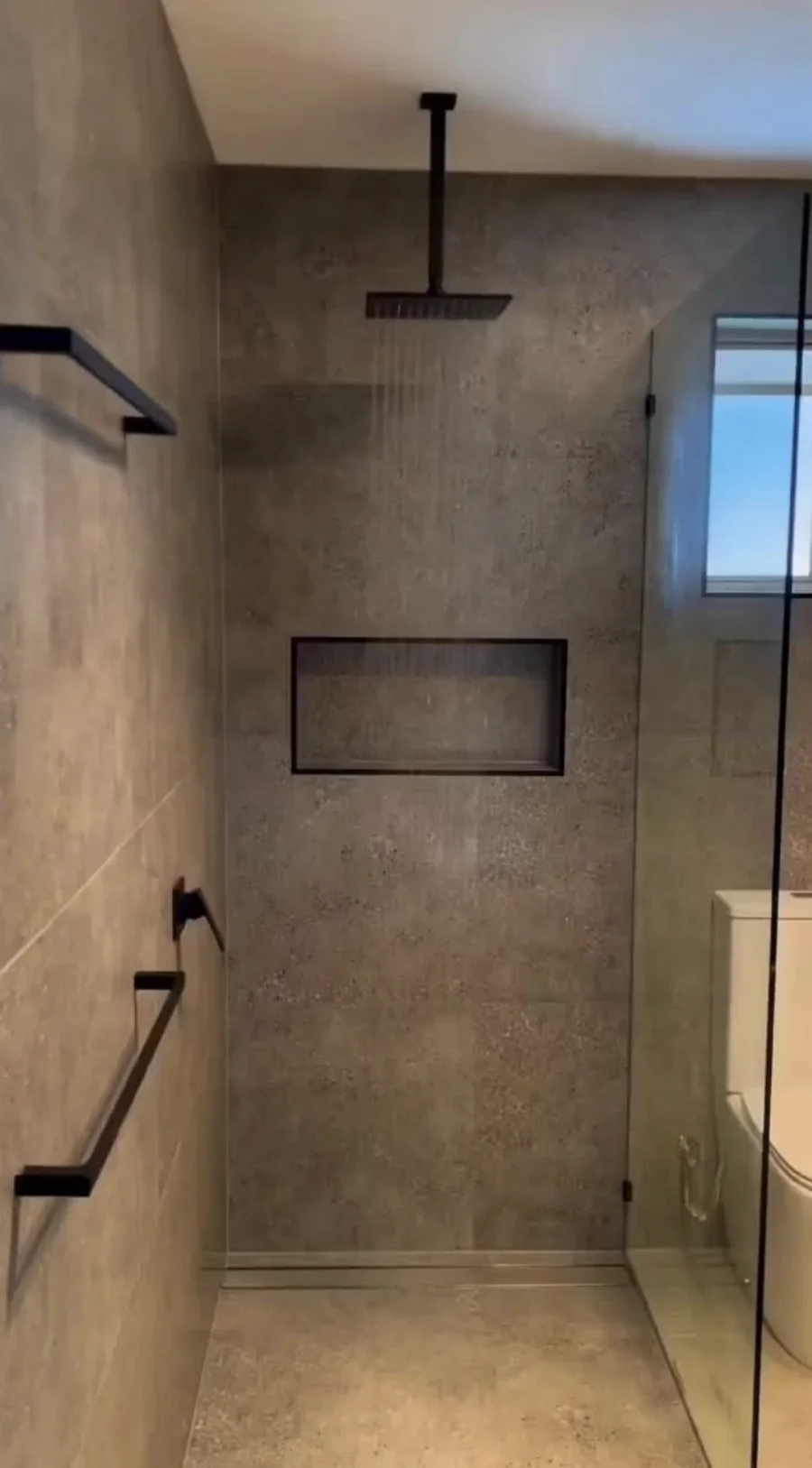
In modern bathroom design, a concealed shower system and recessed faucet are not merely a fixture choice — they define the entire visual language of the space. Traditional bathrooms expose pipes, valve bodies and supply connections that create visual clutter no matter how carefully cleaned. Concealed solutions embed all mechanical components behind the wall, leaving only a trim plate, lever or showerhead on the surface. This guide covers the technical aspects, installation requirements, brand selection and Antalya-specific maintenance strategies for concealed shower and faucet systems.
What Is a Concealed System?
A concealed (or recessed) bathroom system is one where the valve body, supply pipes and connecting fittings are embedded inside the wall or floor, leaving only the control levers, temperature dial or showerhead — surfaces the user directly touches — visible. The main differences compared with exposed systems are:
- Clean aesthetics: No pipes, valves or fittings protrude from the wall. The bathroom can be mopped floor to ceiling and surfaces are far easier to clean.
- Space efficiency: Particularly in compact bathrooms, concealed fixtures that don't project from the wall create both a visual and physical sense of more space.
- Long-term maintenance: With fewer moving parts exposed on the surface, limescale build-up and mechanical wear are confined to a smaller area. However, access in case of a fault is more difficult, making correct installation critical.
- Investment value: Bathrooms fitted with concealed fixtures command a higher perceived value in the property market. The growing preference of foreign investors and short-term rental villa owners in Antalya for concealed systems reflects this reality.
Types of Concealed Shower Systems
Concealed shower systems come in several forms depending on the use case and bathroom design:
- Concealed shower set: The valve body is set into the wall; only a slim trim plate and levers remain visible. The showerhead can be fixed (ceiling or wall-mounted rainfall) or a handheld unit. Suitable for both enclosed shower enclosures and open wet rooms.
- Ceiling-mounted rainfall shower: The showerhead is recessed into the ceiling; water falls in a wide, rain-like curtain. Pipework runs through the ceiling void. Creates a dramatic effect, especially in high-ceilinged villas.
- Dual-function concealed system: A single valve body controls both a rainfall head and a handheld shower. An integrated diverter (built into the valve) switches between the two outlets.
- Concealed bath-shower combination: For bathrooms with a bath, a combined concealed valve controls both the bath filler and the showerhead — eliminating the need for a deck-mounted bath tap.
- Concealed shower panel: An advanced multi-function panel that controls rainfall, handheld shower and body jets from a single recessed unit. Preferred in high-budget spa bathrooms.
Recessed Faucet & Valve Selection
Selecting a recessed faucet (concealed valve) involves both technical and aesthetic criteria. Key parameters to guide the decision:
- Single-lever vs. dual-lever: A single-lever concealed valve adjusts temperature and flow with one movement — quick and practical. Dual-lever models control hot and cold separately, offering a more classic and symmetrical look. Both are widely used in Antalya's modern villa projects.
- Rough-in body and trim kit: Quality concealed fixtures comprise two main components: the rough-in body (valve body set into the wall during the wet stage of construction) and the trim kit (lever, cover plate, showerhead, mounted after tiling). Compatibility between these two components is essential for a quality result.
- Number of outlets: A single-outlet model may suffice for a simple shower enclosure, while bathrooms serving a larger area may require two or three outlets (bath fill, rainfall, handheld). All outlet points should be decided before purchasing the valve.
- Material and surface finish: Concealed valve bodies are typically made of brass. Surface finishes include chrome, brushed chrome, matte black, gold and brushed nickel, among others. In Antalya's humid coastal environment, chrome and PVD (physical vapour deposition) coated models offer the longest resistance to corrosion.
- Water-saving features: Well-designed concealed fixtures include aerators, flow restrictors or eco-stop buttons. Water conservation in Antalya's hot summer months matters both environmentally and financially.
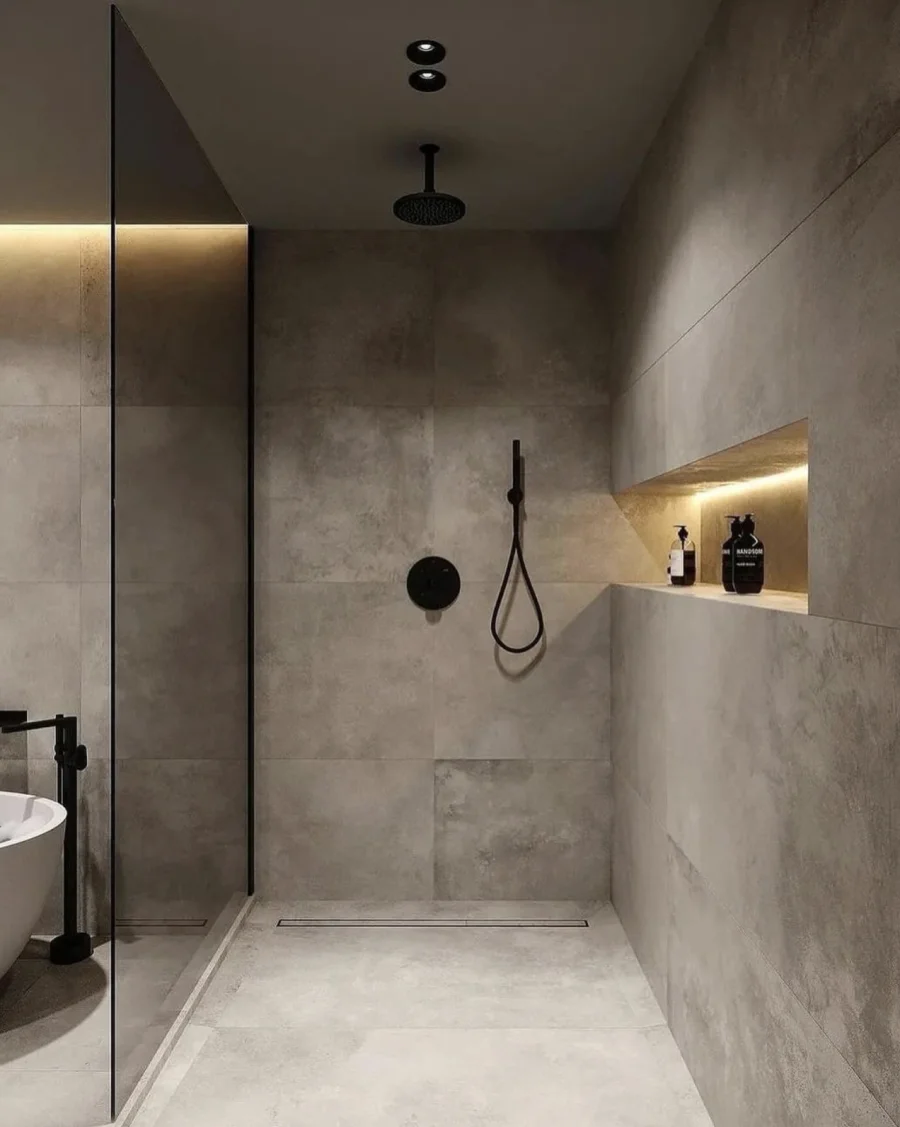 The concealed valve body is completely embedded in the wall; only the round control panel and shower head remain visible.
Thermostatic Concealed Valves
One of the most common questions about concealed shower systems is the difference between a thermostatic valve and a standard concealed valve:
- How does a thermostatic concealed valve work? A thermostatic valve uses a bimetal element to maintain the set water temperature automatically. If another tap is opened elsewhere in the building or the boiler pressure changes, the temperature at the shower does not fluctuate. Set 38 °C on the dial and the water comes out at 38 °C every time.
- Standard concealed valve: Temperature and flow are controlled manually by one or two levers; there is no thermostatic element. Building pressure changes can affect temperature. Lower cost.
- Thermostatic advantages: Consistent temperature comfort, energy savings (no need to re-adjust for every shower), child-safety lock (typically locks above 38 °C) and elimination of sudden scalding risk.
- Disadvantages and cost: Thermostatic valves are significantly more expensive than standard models. The thermostatic cartridge may need replacement after some years. In Antalya's hard water, a water softener or anti-limescale filter extends cartridge life considerably.
- Antalya villa recommendation: In rental villas and hotel-concept residences, thermostatic concealed systems have effectively become the standard for guest safety and comfort. They directly improve guest satisfaction ratings.
Installation Process & Technical Requirements
The correct functioning of a concealed shower system and recessed faucet depends enormously on installation quality. The process requires careful planning at every stage:
- Rough-in stage: The first and most critical phase. The rough-in body, supply connections and any required mounting box are set in place before the wall surface is closed. At this stage, the thickness of the tile or stone cladding, wall depth and the fixture's projection must all be calculated. An error here cannot be corrected later without removing the tiling.
- Wall type and depth requirements: Most concealed rough-in bodies require a wall depth of 60–80 mm. In brick or concrete walls this depth is achieved by chasing. In double-layer plasterboard walls a dedicated installation box is used. Always check the wall structure and existing pipework routing before specifying the system.
- Water pressure requirements: Concealed systems, particularly multi-outlet thermostatic models, typically require a minimum of 1–1.5 bar water pressure. In parts of Antalya where mains pressure can fluctuate, a pressure-regulating valve or booster pump protects the system.
- Pressure testing: All connections must be pressure-tested for leaks before the wall surface is tiled or clad. A leak discovered after tiling requires the entire surface to be stripped out.
- Trim kit installation: Once the rough-in is complete and surfaces are tiled, the trim kit (plate, lever, showerhead) is fitted. Centring the fixture, achieving a watertight seal between the plate and the wall and ensuring visual alignment are the critical details at this stage.
- Expert team requirement: Concealed shower installation spans plumbing, tiling and (for thermostatic digital systems) electrical work. Coordinating these trades professionally is essential for both technical performance and warranty validity.
Limescale in Antalya & Maintenance
Antalya's mains water hardness is above the Turkish national average. This creates specific maintenance requirements for concealed shower systems and recessed faucets:
- How limescale affects concealed systems: Scale build-up causes two main problems: clogging of the showerhead nozzles and narrowing of the channels inside the thermostatic cartridge. Both reduce flow capacity; in thermostatic models, scale also disrupts temperature accuracy.
- Showerhead maintenance: Silicone-nozzle showerheads can be de-scaled by simply rubbing the nozzles with a finger. For ceramic-nozzle models, soaking the head overnight in a 1:1 water-vinegar solution monthly is sufficient. In Antalya's conditions this should be done at least every two months.
- Cartridge maintenance and replacement: Standard concealed valve cartridges may need replacement every 5–8 years; Antalya's hard water can shorten this to 3–5 years. Early warning signs include difficulty adjusting hot/cold, reduced flow and unusual noise. Thermostatic cartridge replacement is more technical and should be carried out by the manufacturer's service centre.
- Water softener and filter: The most effective way to extend the life of a concealed system is to fit a magnetic anti-limescale filter or water softener at the supply inlet. This investment can double fixture life and simultaneously improves boiler efficiency — a strong recommendation for long-term property owners in Antalya.
- Chrome and matte surface cleaning: To prevent limescale spots on the visible trim surfaces, wiping them dry with a soft cloth after each use is ideal. If a cleaning product is needed, use only non-acidic products suitable for bathroom fixtures. Acidic cleaners permanently damage chrome and PVD coatings.
Brand Selection & Value for Money
The concealed shower and faucet market covers a very wide price range. Brands can be grouped into three broad categories:
- Premium segment (Grohe, Hansgrohe, Duravit, Vitra Collection): These brands stand out for long warranties, accessible spare parts and superior design. Thermostatic cartridge quality and limescale resistance are highest in this category. They are among the most frequently specified brands in Antalya's luxury residential and villa projects. Initial cost is higher, but total cost of ownership (TCO) over the fixture's lifetime is often lower.
- Mid segment (Vitra, Artema, Eca, Geberit): Turkish and European mid-range products offer a strong price-performance balance well suited to Antalya's conditions, with the added advantage of local spare-part availability. Design range and technical specification are increasingly approaching the premium segment.
- Entry segment: Low-cost concealed fixtures may appear attractive in the short term, but in Antalya's hard water and high-usage conditions their service life is noticeably shorter. When fault repairs — which may require removing tiles — are factored in, the initial saving frequently disappears quickly.
- Spare parts and service network: The existence of a local service network in Antalya is a critical selection criterion. Avoid brands where spare part lead times exceed 2–3 weeks — especially important for those managing rental villas.
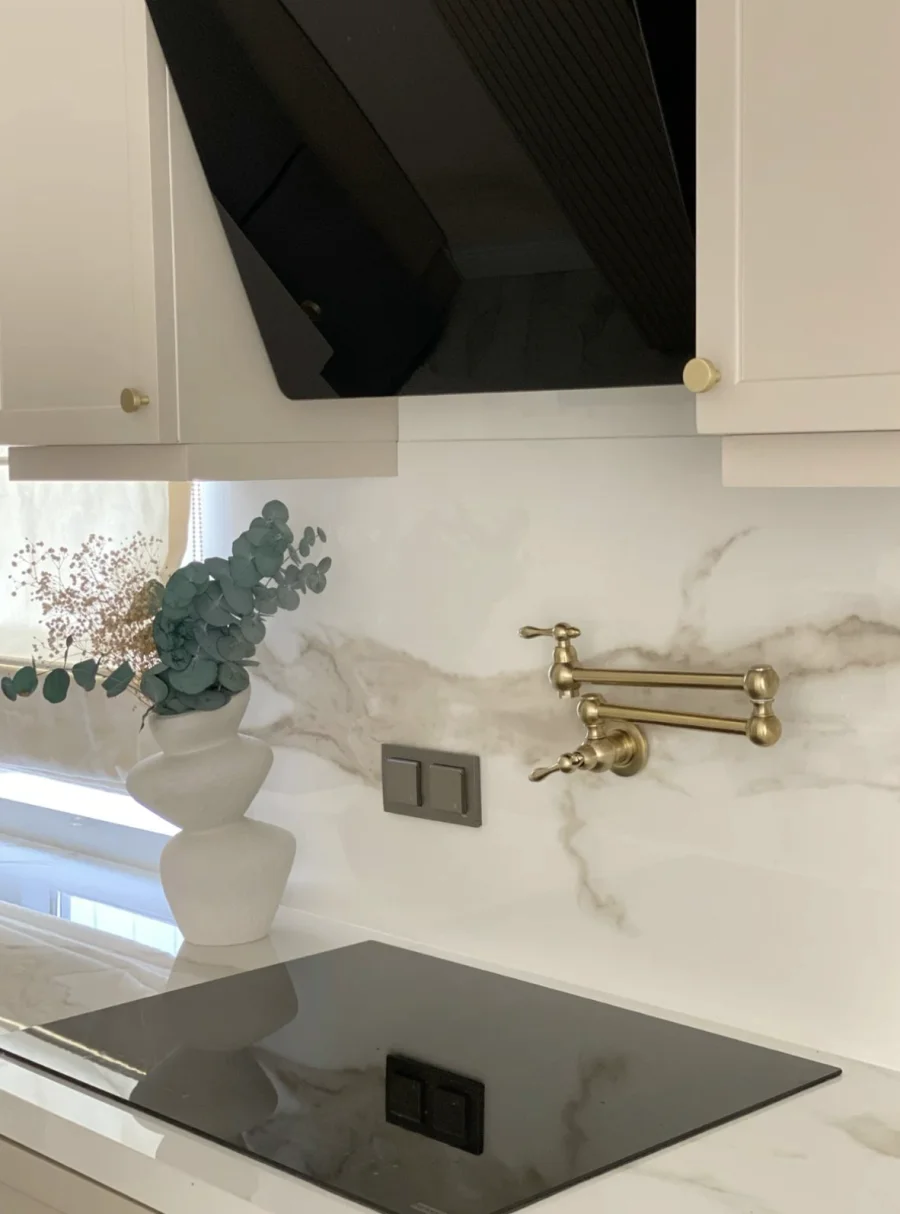 A wall-mounted concealed faucet on a marble backsplash — all plumbing hidden, only the elegant spout visible.
Design Trends
Design trends observed in new residential projects and renovation works across Antalya are moving in the following directions:
- Matte black concealed fixtures: Over recent years, matte black concealed faucets and shower sets — particularly striking against light-coloured ceramic or marble surfaces — have become a symbol of modern luxury bathrooms. This is the most popular finish choice among international clients in Antalya.
- Ceiling rainfall shower combined with underfloor heating: The combination of an open walk-in shower area, a recessed ceiling rainfall head and underfloor heating is becoming standard in Antalya's luxury villa segment. The trio delivers a complete spa experience.
- Minimalist trim plates and invisible seals: Concealed fixture trim plates are becoming progressively thinner, with the seal between plate and tile made completely invisible. In "full-flush" mounting, the trim surface and the wall tile sit in the same plane.
- Gold and brass tones: Matte gold and brushed brass surface finishes are popular in boutique-hotel-style bathrooms where dark marble and natural stone are the focal point. This aesthetic draws significant interest in Antalya's Airbnb and short-term rental villa market.
- Smart concealed shower systems: Digital-panel concealed shower systems, programmable via smartphone apps and capable of monitoring water consumption, are becoming more widespread. Remote control is particularly convenient for owners managing large villas with multiple bathrooms.
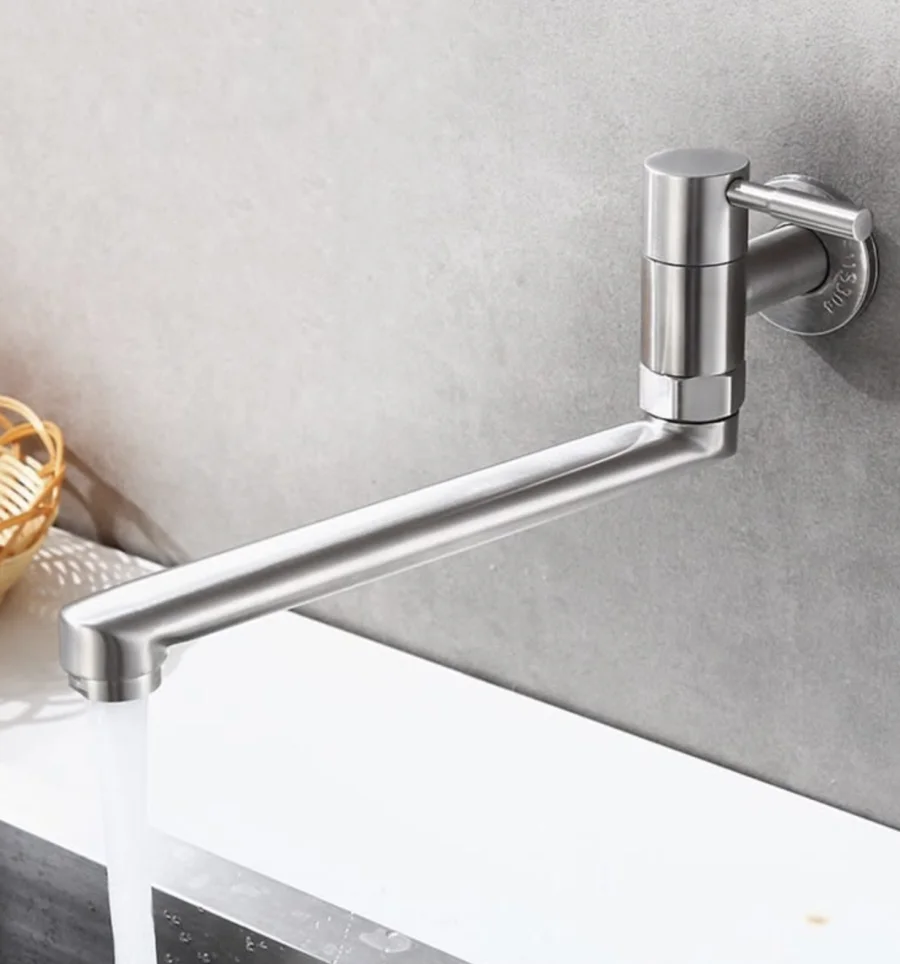 A brushed stainless steel concealed wall faucet — simplicity and durability in one modern fixture.
"A concealed shower and faucet system is the finishing touch that truly completes a bathroom. Installed by the right brand with professional workmanship, a concealed plumbing system operates without issues for decades and directly adds value to the property."
Would you like a site visit and consultation for a concealed shower system or recessed faucet installation in Antalya? Contact our team — we offer a free preliminary assessment for every bathroom renovation project, regardless of size.