Flooring is one of the renovation decisions that is most difficult and costly to reverse later, which makes getting it right from the start essential. In Antalya renovation projects, the question we are asked most often is about flooring: ceramic, parquet, or vinyl? Each material has its own strengths, limitations, and ideal use cases. In this guide, we compare all the options in detail and share the most suitable choices for Antalya's specific climate conditions.
Ceramic and Tile Flooring
Ceramic and tile remain the most widely used flooring material in Antalya. The main reasons are the cooling sensation in a hot climate, outstanding resistance to water and moisture, and easy maintenance:
- Porcelain ceramic: Fired at high density, porcelain ceramics have an extremely low water absorption rate, making them highly resistant to moisture and temperature fluctuations. They are an ideal choice for homes in Antalya's coastal areas. Large-format tiles of 60x60 cm and above are currently the most popular sizes.
- Rectified ceramic: Rectified tiles have precisely cut edges, allowing grout joints to be kept to a minimum. These tiles offer a cleaner, more modern look and create a striking effect in large open-plan spaces.
- Stone-look ceramic: These ceramics with textures and patterns that mimic natural stone offer both an aesthetic and practical solution. Options include marble, travertine, and concrete looks — delivering a similar aesthetic to real stone without the maintenance challenges.
- Anti-slip surface: In wet areas such as bathrooms, kitchens, and outdoor terraces, using ceramics with an anti-slip surface certification is essential for safety. Tiles with R10 rating or above are appropriate for these areas.
- Large-format trends: Very large formats such as 120x120 cm, 120x60 cm, and even 160x80 cm are increasingly preferred for modern villas and apartments. A low-grout appearance makes a space look larger and more airy.
Hardwood Parquet Options
Hardwood flooring adds warmth, naturalness, and prestige to a home. Preferred especially in villas and luxury residences in Antalya, parquet can be used for years without problems with the right selection and installation:
- Solid wood parquet: Made entirely from wood, solid parquet is the longest-lasting option. The ability to sand and refinish the surface over time is a major advantage. However, it requires careful material selection and installation against Antalya's humid coastal climate. Oak, beech, and teak are the most popular species.
- Laminate flooring: Laminate features a wood-look HDF surface layer and is more tolerant of moisture and temperature changes than solid wood. AC3 and above wear class is recommended for high-traffic areas. In air-conditioned interiors in Antalya, it is a comfortable option.
- Engineered parquet: Using a thin solid wood top layer over plywood or HDF base layers, engineered parquet offers the appearance of solid wood with a more stable structure. It moves far less in response to humidity and temperature changes than solid wood, making it a workable choice for Antalya's climate conditions.
- Bamboo flooring: An eco-friendly and extremely durable alternative, bamboo flooring has high scratch resistance. Preferred in modern and minimalist interiors, bamboo performs well in Antalya's humidity conditions.
- Underfloor heating compatibility: Not all parquet types are compatible with underfloor heating systems. For parquet to be used with underfloor heating, engineered parquet or compatible laminate should specifically be chosen.
Vinyl and LVT Flooring
Vinyl and LVT (Luxury Vinyl Tile) flooring, which has rapidly gained popularity in recent years, stands out for both its aesthetic and practical features. It is particularly favoured in areas with moisture issues or fast-track renovation projects:
- LVT (Luxury Vinyl Tile): Realistically imitating wood or stone with detailed textures, LVT is a perfect choice for wet areas such as bathrooms, kitchens, and basements with its 100% waterproof structure. In Antalya, it can also be used in interior spaces around swimming pools.
- SPC (Stone Plastic Composite): Made from a mixture of stone powder and PVC, SPC flooring is a harder and dimensionally more stable version of LVT. It maintains its shape even in Antalya's hot summers, with expansion and contraction due to heat reduced to a minimum.
- Click installation system: The majority of vinyl flooring is installed with a click (lock) system — no adhesive is required. This enables quick installation and allows for partial replacement or complete removal and reinstallation if needed.
- Sound insulation: Vinyl models with an underlay are also effective for sound insulation. This feature is a major advantage, particularly in multi-storey buildings and rental apartments.
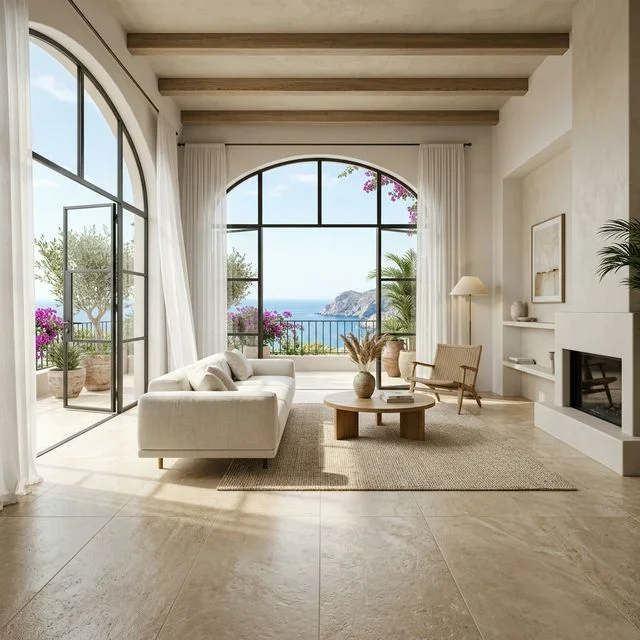 The right flooring choice and professional installation determine the longevity and comfort of a space.
Natural Stone Flooring
Natural stone flooring, in harmony with Antalya's Mediterranean heritage, continues to be a timeless choice in premium residences and traditional architecture:
- Travertine: Unique to Antalya, travertine is the material that most beautifully reflects Mediterranean aesthetics, with both local availability and warm tones. It is especially preferred for villa entrances, living areas, and terrace floors. Matt, polished, or brushed finishes can be achieved depending on the surface treatment.
- Marble: With its classic and prestigious appearance, marble is preferred especially for living room and bathroom floors. It provides a cool feel in spaces that receive intense sunlight in Antalya. However, due to its sensitivity to acid and scratching, careful selection is required in high-use areas like kitchens.
- Granite: One of the hardest natural stones, granite is preferred in high-traffic areas, kitchens, and outdoors. It is frost-proof and corrosion resistant, making it frequently used at poolside and in garden paths.
- Natural stone maintenance: All natural stones require regular sealer applications. This prevents liquids and stains from entering the stone's pores. Annual maintenance is recommended to prevent limescale marks caused by Antalya's hard water.
Epoxy Flooring
Epoxy floor coatings, long used in commercial settings, are increasingly being chosen for residential projects in recent years:
- Industrial-chic aesthetic: Single-colour or metallic-effect epoxy floors create a striking look in loft and modern minimalist spaces. In particular, they provide a seamless, joint-free floor in open-plan living areas.
- Superior durability: Epoxy is extremely resistant to chemicals, scratching, and heavy traffic. It is preferred in demanding areas such as garages, workshops, and commercial kitchens.
- Application conditions: Epoxy coating applied incorrectly on moisture-containing subfloors can cause blistering and delamination. In Antalya's humid conditions, measuring the moisture content of the subfloor before application is essential. Professional application is mandatory.
- Micro cement: Offering a similar visual effect to epoxy, micro cement can be applied on both floor and wall surfaces in a thinner application layer. It is also a popular modern coating for bathroom and kitchen countertop surfaces.
Choosing the Right Floor for Antalya's Climate
Antalya's subtropical Mediterranean climate has specific characteristics that directly influence flooring choices. Making your selection with these conditions in mind ensures the right long-term result:
- High temperatures and sunlight: Flooring materials directly exposed to the sun heat up and may experience colour fading. UV-resistant material selection is important for outdoor terraces and sun-facing living rooms. Light-coloured ceramics absorb less heat, making them preferred outdoors.
- Coastal humidity: In locations close to the sea, salty air and high humidity increase the risk of deformation in hardwood flooring. In these areas, engineered parquet, LVT, or ceramic are safer choices than solid wood.
- Thermal comfort in high temperatures: During summer, ceramic and natural stone floors feel cool even in rooms without air conditioning. Wood and vinyl provide a warmer underfoot feeling and are therefore a good choice for air-conditioned bedrooms.
- Winter rains: Given Antalya's heavy winter rainfall, anti-slip ceramic is essential in entrance halls and at outer door thresholds. Easy-to-clean materials should be preferred in transition zones where dirt and water are tracked indoors.
Installation Process and Key Considerations
Flooring quality is not only determined by the material but also directly by the quality of installation. Poor application shortens the lifespan of even the best materials:
- Subfloor preparation: Levelling existing floors, filling cracks, and creating a moisture barrier are the most critical steps to carry out before laying any floor covering. Any flooring applied over an uneven or damp subfloor will cause problems over time.
- Moisture testing: The moisture content of the subfloor must be measured before laying ceramic and natural stone. If moisture is above the standard level, moisture insulation must be applied first.
- Grout selection: The colour and width of ceramic grout lines greatly affect the overall appearance of the floor. Wide grout hides adhesive errors; narrow grout provides a modern look but requires more precise workmanship.
- Expansion gaps: Sufficient expansion gaps must be left at wall-floor junctions and across large areas for thermal expansion and contraction movements. These gaps are closed with silicone or decorative profiles.
- Professional installation: Large-format ceramics, natural stone, and epoxy coatings in particular require experienced craftsmen. Checking the installer's references is critically important for the final result.
Maintenance and Longevity
Proper maintenance can multiply the lifespan of any floor covering. Different maintenance routines apply to each material type:
- Ceramic care: Regular sweeping and damp mopping is sufficient. Grout-cleaning products can be used for grout maintenance. To prevent limescale marks from Antalya's hard water, a microfibre cloth with minimal water is recommended.
- Parquet care: Hardwood flooring should be protected from moisture; a lightly damp cloth is preferable to wet mopping. Regular wax or parquet polish application protects the surface. Surface scratches on solid parquet can be removed by sanding.
- Vinyl care: Vinyl flooring is one of the easiest options to maintain — it withstands wet mopping. Placing protective pads under furniture with sharp-edged legs prevents scratching.
- Natural stone care: Sealer application once or twice a year is essential. Acid-containing cleaners (lemon juice, vinegar) must never be used as they damage the stone surface.
"Flooring is a foundational decision for any home. The right choice delivers both aesthetics and years of lasting comfort."
To receive expert guidance on choosing the most suitable flooring for your home or investment property, contact us. We offer a free site visit and consultation service.