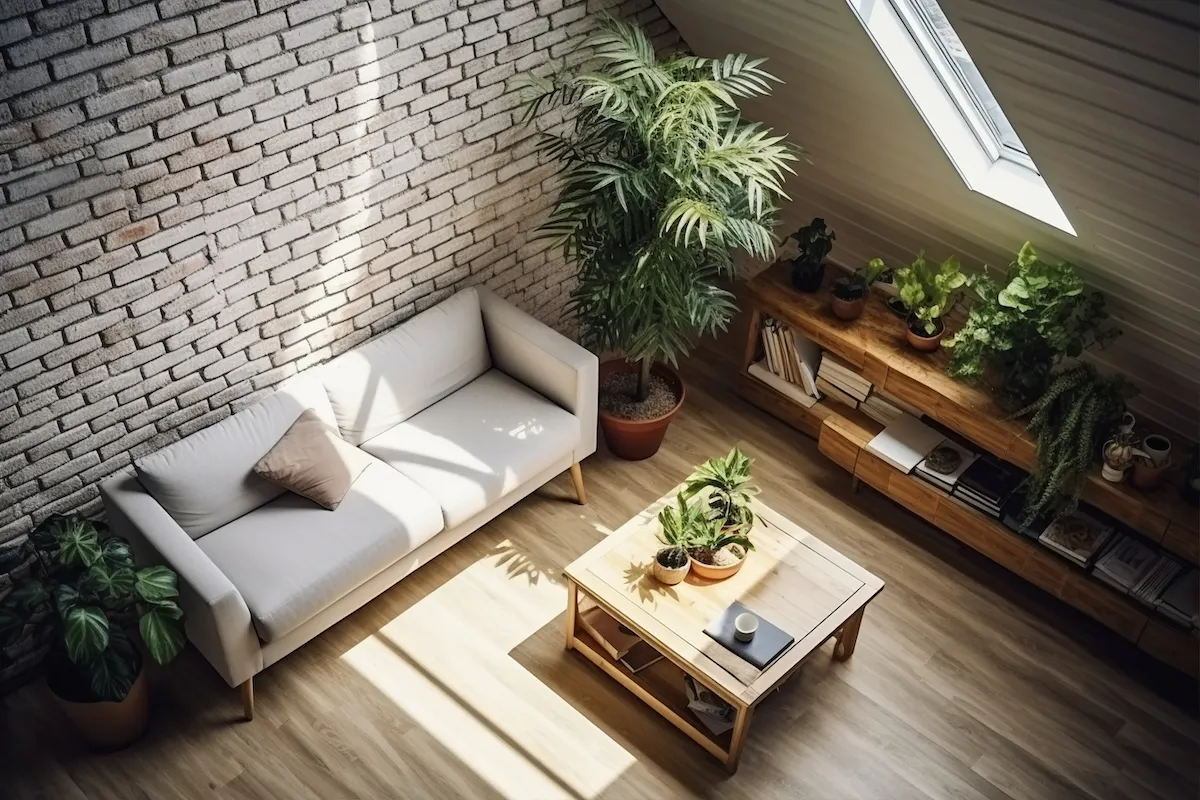
Small and compact living spaces are a defining feature of central Antalya's real estate landscape. Studio apartments and compact 1+1 units in popular districts like Konyaalti, Lara, and Kaleici are in high demand — from long-term expat residents to short-term rental investors targeting the booming Airbnb market. The challenge is universal: how do you make 40–55 m² feel generous, functional, and visually appealing?
The answer is not simply buying smaller furniture. True small space renovation in Antalya requires a systematic approach — one that considers layout, structure, lighting, storage strategy, and material selection together. As Renovation Antalya, we have applied these principles across hundreds of compact apartment projects. This guide consolidates every technique we use, from quick cosmetic updates to full structural transformations.
1. The Philosophy of Small Space Design: Every Centimetre Counts
The first step in any successful small space renovation is a mindset shift. In a large apartment, a poorly used corner is merely inefficient. In a compact studio, it is a significant loss. Every centimetre must justify its existence — as storage, as circulation space, or as a visual breathing point that makes the room feel larger.
Our design philosophy for compact apartments in Antalya rests on three principles:
- Eliminate visual clutter: The eye needs places to rest. Built-in storage hides possessions from view, creating a calmer, more spacious feel. Visible clutter is the fastest way to make a small room feel even smaller.
- Prioritise flow: Furniture placement should never interrupt the natural path through the apartment. Wide circulation routes — even if they are only 80–90 cm — make a space feel generous. Cramped, obstacle-filled rooms feel half their actual size.
- Layer functions: In a small apartment, every piece of furniture, every wall panel, and every recess should ideally serve two purposes. A staircase that contains drawers, a sofa with hidden storage, a dining table that folds against the wall — these layered functions reduce the total quantity of furniture needed and therefore free up space.
This philosophy is particularly relevant for foreign property owners in Antalya who want their compact unit to perform well as a short-term rental. Airbnb guests staying in a 35 m² studio should feel that the space was designed for them — not simply that a large apartment's furniture was squeezed into a smaller box.
2. Vertical Storage: Floor-to-Ceiling Solutions
The most consistently underused dimension in small Turkish apartments is height. Standard apartments in Antalya typically have ceiling heights of 260–280 cm, yet most commercially available storage furniture reaches only 180–200 cm, leaving 60–100 cm of wasted vertical space. Reclaiming that space is the single highest-impact change you can make in a small apartment renovation.
- Floor-to-ceiling custom joinery: In the kitchen, living area, and bedroom, extending storage units all the way to the ceiling dramatically increases capacity without occupying additional floor area. The visual effect is equally powerful — tall vertical lines draw the eye upward and make the ceiling appear higher. Reserve upper sections for items used infrequently: seasonal bedding, spare luggage, appliance boxes.
- Recessed wall niches: Where walls are thick enough, cutting recessed shelving niches into the wall creates storage or display space with zero floor footprint. Backlit niches also serve as ambient lighting features, adding depth and dimension to otherwise flat walls. This technique is particularly effective in bathroom walls and alongside beds in studio layouts.
- Above-door shelving zones: The 30–40 cm of wall space above every door frame is almost always empty. A continuous shelf running above multiple doors in a corridor or open-plan area can store books, baskets, or decorative items without visually congesting the room's main sight lines.
- Pegboard and track systems: In kitchens and home office corners, wall-mounted pegboard systems or modular track shelving eliminate the need for freestanding storage entirely. These systems are highly flexible, easy to reconfigure, and keep worktops completely clear.
For Airbnb owners, tall built-in storage also serves a practical guest management function: it provides guests with ample wardrobe and storage space — a feature that consistently appears in five-star reviews — while keeping the apartment tidy and photogenic between stays.
3. Multi-Functional and Convertible Furniture
In a compact apartment, a piece of furniture that serves only one purpose is a luxury you cannot afford. The global market for space-saving furniture has expanded enormously in recent years, and many of the best solutions are now readily available in Turkey through suppliers in Antalya, Istanbul, and online. Here is what we recommend most frequently:
- Murphy beds and wall beds: A wall-integrated bed system folds up during the day to reveal usable living space. Modern Murphy bed units can include a sofa, a desk, or shelving on the front panel, so the wall is functional even when the bed is stowed. For studio apartments being renovated for Airbnb, a high-quality Murphy bed transforms a single-purpose sleeping space into a multi-use living area that photographs beautifully.
- Sofa beds and convertible seating: A well-made sofa bed in a studio serves as the primary seating during the day and a comfortable sleeping area at night. Choose models with a real mattress of at least 12 cm thickness rather than a thin fold-out pad — guest comfort depends on it.
- Storage ottomans and benches: Ottoman coffee tables with internal storage are among the highest-value furniture purchases for small apartments. They provide additional seating when guests arrive, a surface for drinks or books, and concealed storage for blankets, remote controls, and items that would otherwise clutter the room.
- Extendable dining tables: A dining table that seats two in its compact form but expands to seat six for guests is ideal for compact 1+1 apartments. At its minimum size, it should be no wider than 70–80 cm and no longer than 90 cm, leaving comfortable clearance around it.
- Beds with integrated storage: Divan-style beds with hydraulic-lift bases provide the largest single storage compartment in a small apartment — typically equivalent to a large chest of drawers. Ideal for bedding, out-of-season clothing, and luggage.
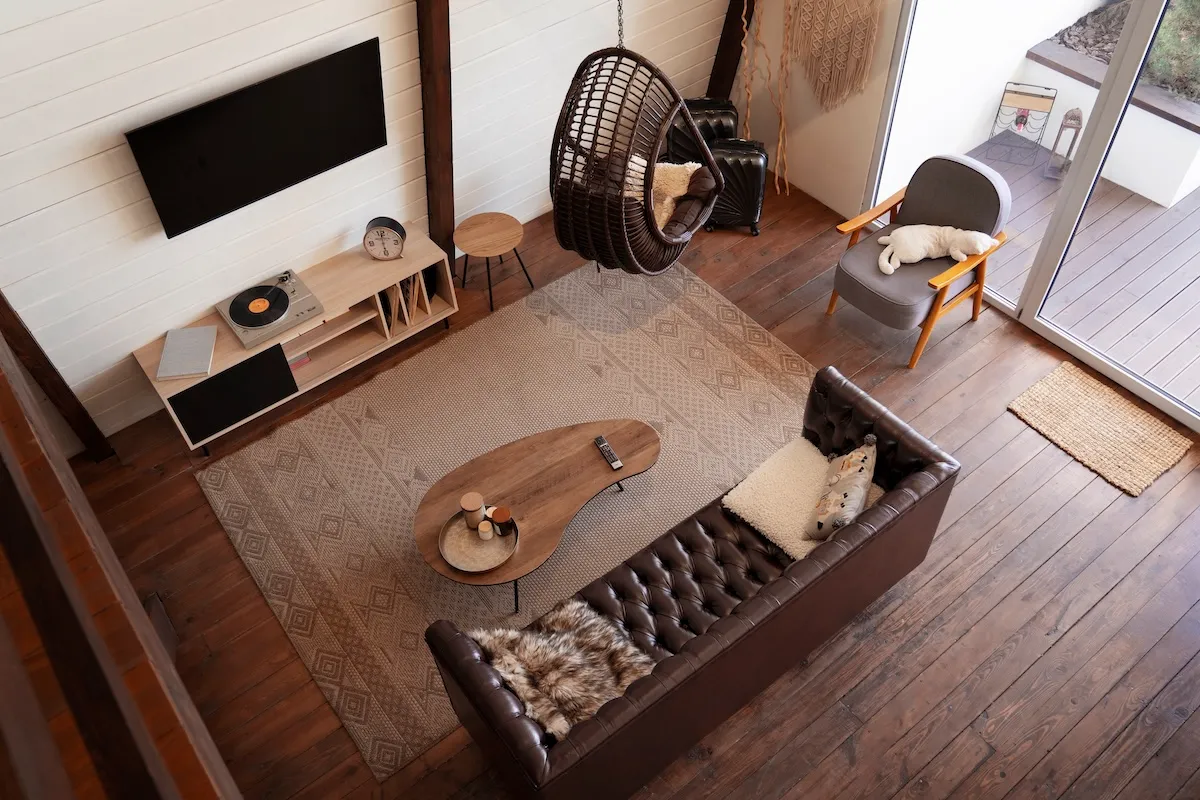 Wall-mounted folding tables create dining or working areas without
taking up permanent space.
Wall-mounted folding tables create dining or working areas without
taking up permanent space.
Wall-mounted folding tables deserve special mention. A fold-down table attached to the wall at dining or desk height takes up virtually no space when folded, yet provides a full working or dining surface when open. For Airbnb guests who work remotely — an increasingly important demographic in Antalya — a dedicated desk space, even a compact fold-down one, is a significant booking advantage.
"In a small space, storage is not a necessity, but a design opportunity. With smart solutions, you achieve both order and enhance the aesthetics of your space."
4. Optical Illusions: Mirrors, Color, and Lighting
You cannot change the footprint of your apartment, but you can dramatically change how large it feels. The tools are well-established: mirrors, light colours, strategic lighting, and consistent materials. Used together, these techniques can make a 40 m² apartment feel closer to 55–60 m² in perceived size. This is not simply an aesthetic benefit — it translates directly into better Airbnb photographs and higher guest satisfaction scores.
- Large-format mirrors: A full-height mirror on a wall adjacent to a window doubles the perceived depth of the room and reflects natural light into darker corners. In studio apartments, a mirror on the wall opposite the entrance creates an immediate sense of spaciousness the moment guests arrive. Consider custom-cut mirrors running an entire wall width — the effect is dramatically more powerful than a standard-sized mirror.
- Light and neutral colour palette: For walls, ceilings, floors, and large furniture pieces, choose white, off-white, warm cream, or light grey. These colours reflect light rather than absorbing it, making every surface visually recede and enlarging the perceived volume of the room. Dark feature walls can be used sparingly for accent purposes — a single dark alcove or headboard wall — but should not dominate the main surfaces.
- Layered and adjustable lighting: Avoid relying on a single central ceiling light. Layers of lighting — recessed ceiling spotlights, wall sconces, under-cabinet kitchen lighting, floor lamps — create depth and allow the space to feel different at different times of day. Warm white LED lighting (2700–3000K) is most flattering for residential spaces and creates the inviting atmosphere that earns five-star Airbnb reviews.
- Seamless, continuous flooring: Using the same flooring material throughout the apartment — without changes at door thresholds — creates a visual continuity that makes the space flow. Large-format tiles (60×60 cm or 60×120 cm) or wide-plank engineered wood both reinforce this effect. Avoid busy patterns or small tile formats, which fragment the visual field and make rooms appear smaller.
- Vertical stripes and tall elements: Wallpaper with narrow vertical stripes, floor-length curtains hung from ceiling level (not window frame level), and tall, slender furniture legs all draw the eye upward and increase the perceived ceiling height.
5. Hidden and Floating Storage Solutions
Traditional freestanding storage units — wardrobes, chest of drawers, side tables — rest on the floor and visually anchor themselves to it, creating a sense of mass and weight. Floating and hidden storage solutions dissolve this heaviness, making the floor appear larger and the room lighter.
- Floating TV units and media storage: Wall-mounted TV units with no floor contact keep the floor visible beneath them, dramatically lightening the visual weight of the main living wall. Combined with concealed cable management, this creates a clean, hotel-quality aesthetic that photographs exceptionally well.
- Floating bedside tables: Replacing traditional bedside tables with wall-mounted shelves or floating boxes frees up floor area around the bed, making the bedroom feel larger. Integrated USB charging points and lighting mounts within the bedside shelf are a popular upgrade in Airbnb renovations.
- Baseboard drawer systems: The 10–15 cm kickboard zone at the base of kitchen cabinets is typically dead space. Custom baseboard drawers convert this zone into shallow storage for trays, baking sheets, and flat kitchen items that otherwise occupy valuable cabinet space above.
- Under-stair storage: In duplex apartments or properties with raised platforms (a common feature in Antalya's mezzanine-style studios), every step of the staircase can contain a drawer or cupboard. The total storage volume of a six-step staircase can equal a full wardrobe.
- Corner utilisation: Corners are frequently wasted in small apartments. Custom-designed corner shelves, rotating carousels in kitchen cabinets, and L-shaped built-in wardrobes all recover corner space that standard furniture cannot reach.
6. Replacing Hinged Doors with Space-Saving Alternatives
A standard interior hinged door requires approximately 0.8–1.0 m² of clear floor space for its swing arc. In a small apartment, this is not an abstract number — it is the difference between a sofa that fits and one that does not, or a desk that can stand against a wall and one that must be moved every time the door opens. Eliminating hinged doors is one of the highest-impact structural changes in a compact apartment renovation.
- Pocket sliding doors (disappearing into the wall): The premium solution for bathroom, bedroom, and storage room doorways. The door slides horizontally into a cavity within the wall, completely disappearing from view when open. There is no door visible, no swing arc, and no obstruction — the wall becomes completely usable. Installation requires building a false wall cavity, which is standard in new renovations but straightforward to add during a full refurbishment.
- Surface-mounted sliding doors: A more affordable alternative where the door slides along a wall-mounted track on the outside of the wall rather than inside it. The door is always visible but takes up no swing arc space. Suitable for bedroom and wardrobe openings where the adjacent wall is unobstructed.
- Bi-fold doors: For wider wardrobe openings or bathroom doors that face tight spaces, bi-fold doors fold flat against themselves, reducing their swing arc by half. A practical middle-ground between a standard hinged door and a full pocket slider.
- Translucent glass partitions: In studio apartments, replacing a solid wall between living and sleeping areas with a sliding glass partition preserves visual openness while still allowing acoustic and visual privacy when needed. Frosted or reeded glass provides privacy without blocking light. This is a particularly popular feature in Antalya Airbnb studios, where the open feel improves both the photographic appeal and the guest experience.
- Curtain dividers: For a lightweight, low-cost solution, ceiling-track curtain systems can divide a studio into sleeping and living zones without any permanent construction. Linen or velvet curtains in neutral colours add a soft, boutique-hotel aesthetic.
7. Open-Plan Transformation for Small Apartments
For compact apartments in Antalya where the floor plan still uses a segmented, room-by-room layout from an earlier era of Turkish construction, the most transformative renovation is removing internal partition walls to create an open-plan living space. This is particularly common in older 1+1 apartments built in the 1990s and early 2000s, where a separate, often windowless kitchen is connected to a small corridor and then a living room, making both spaces feel cramped despite a combined footprint that could work beautifully as a single open volume.
What does open-plan transformation involve?
- Structural assessment: Before any wall comes down, our team identifies whether the wall is load-bearing or a non-structural partition. In the majority of Antalya's modern apartment blocks, internal kitchen walls are non-structural partitions and can be removed entirely. Load-bearing walls require a structural steel or concrete beam to transfer the load, which adds cost but is entirely achievable. We always obtain the necessary permits and provide structural calculations where required.
- Kitchen relocation and reconfiguration: Opening the kitchen to the living area typically involves relocating plumbing and gas connections, installing a new kitchen fitted against an exterior wall, and upgrading ventilation to a recirculating extractor hood. The result — a combined kitchen-living-dining space — can feel twice as large as the original two separate rooms.
- Studio layout design: In a true studio conversion, the sleeping area is defined by a platform, a partial wall, a bookcase divider, or simply by furniture placement — rather than a full enclosed room. This approach maximises the feeling of spaciousness while keeping all functions accessible. For Airbnb use, a well-designed open studio often achieves higher guest ratings than a poorly laid out 1+1.
- Zoning without walls: Once walls are removed, zones are defined through material changes (a different floor finish in the kitchen area), ceiling features (a lowered section or a pendant light cluster over the dining area), and furniture placement. The visual result is a sophisticated, loft-like interior that feels designed — not simply cleared out.
Open-plan transformation is our most requested renovation type for compact Antalya apartments being prepared for the short-term rental market. The Airbnb photography advantage alone is significant: an open plan photographs with wide, unobstructed views that make the apartment look substantially larger than its actual square meterage. Learn more about designing your property for the rental market in our Airbnb conversion guide for Antalya investors.
8. Small Space Renovation Cost Guide for Antalya
One of the most common questions from foreign property owners considering a compact apartment renovation in Antalya is: what will it cost? While every project is unique, we can provide realistic budget ranges based on the type and scope of work. All figures below are approximate and current as of 2025.
- Cosmetic refresh (painting, lighting, minor joinery): For a 40–50 m² studio or 1+1, a high-quality cosmetic refresh — new paint throughout, upgraded lighting fixtures, new internal doors, and a kitchen respray — typically costs in the range of 2,500–5,000 EUR. This scope is ideal for properties that are structurally sound but need visual updating for Airbnb photography.
- Mid-scope renovation (bathroom and kitchen renewal, flooring, storage): Replacing bathroom tiling and sanitary ware, installing a new kitchen, new flooring throughout, and adding custom built-in storage in a 45–55 m² apartment typically ranges from 7,000–14,000 EUR depending on material specification. This is the most common scope for foreign investors preparing a compact unit for the rental market.
- Full structural renovation (open-plan transformation, sliding doors, custom joinery throughout): A comprehensive renovation including wall removal, kitchen relocation, full bathroom replacement, bespoke built-in furniture, and all finishes in a 45–55 m² apartment typically ranges from 15,000–25,000 EUR. For Airbnb investors, this level of renovation targets the premium listing tier where nightly rates are 40–60% higher than standard properties.
- Furniture and decoration budget: For a furnished, Airbnb-ready studio, budget an additional 4,000–8,000 EUR for furniture, bedding, kitchen equipment, and decorative items. Quality investment here directly impacts guest ratings and the nightly price you can command.
Return on investment for well-executed compact apartment renovations in Antalya is strong. A 45 m² studio in Konyaalti renovated to a high standard and listed as a furnished short-term rental can achieve nightly rates of 60–120 EUR during the summer season, with occupancy rates of 75–90% in peak months. At these rates, a 15,000 EUR renovation investment can be recovered within two to three seasons. For a detailed financial feasibility analysis tailored to your specific property, contact our team for a free consultation.
For broader context on decorating your renovated apartment to current market tastes, explore our guide to interior decoration trends in Antalya.