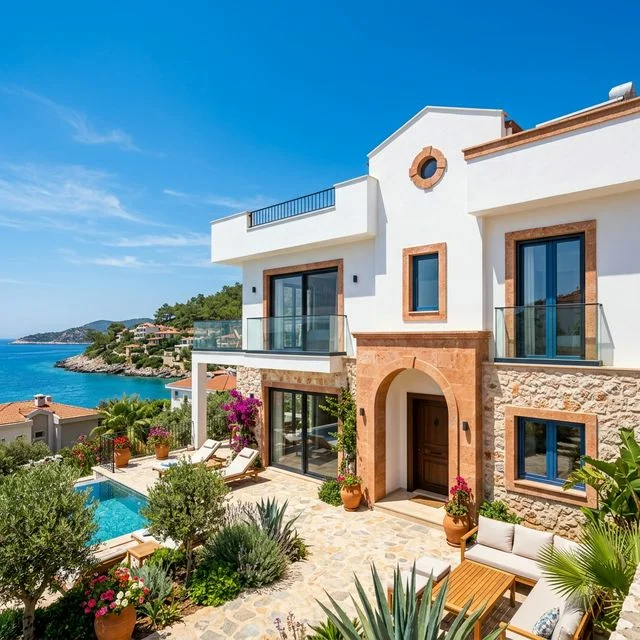
A building's exterior facade endures far harsher conditions than any interior finish. In Antalya that challenge is especially demanding: intense sunshine for most of the year, salt-laden sea air along the coastline, and unexpectedly heavy rainfall in winter. This triple combination makes it difficult to replicate results achieved with standard European or Istanbul products. When the wrong materials are used, paints crack within a few years, renders absorb moisture, and surfaces begin to yellow and fade. In this guide we examine the most durable facade solutions for Antalya's specific climate, proper application procedures, and long-term maintenance strategies.
How Antalya's Climate Attacks Facades
Antalya is one of Turkey's sunniest cities, with annual sunshine exceeding 3,000 hours. That means facade materials are exposed to direct UV radiation for more than 3,000 hours every year. Coastal salt air adds a constant chemical attack on top of that:
- UV radiation: UV-A and UV-B rays break down the organic binders in paints and renders. Colour fading, surface cracking and chalking are the first signs. Low-quality or climate-inappropriate coatings can deteriorate visually in as little as two to three years.
- Salt air: Within two to three kilometres of the coastline, salt- laden air is a serious threat. Salt penetrates the pores of natural stone, attacks paint films and initiates corrosion on metal components. Aluminium profiles, steel railings and anchor fixings are most vulnerable.
- Thermal shock: In summer, facade surfaces in Antalya can reach 50-60°C during the day and drop to 25-30°C at night. This daily thermal cycling subjects materials to constant expansion and contraction stress, eventually leading to cracking and delamination.
- Winter rainfall: Antalya's heavy winter rains enlarge micro-cracks in facades. Water that enters these cracks expands them further and destroys the bond between render and paint layers.
- Biological growth: High humidity combined with heat accelerates algae, moss and mould growth, particularly on north-facing elevations. This biological colonisation discolours surfaces and over time damages the structural integrity of the coating.
Durable Facade Materials
Choosing facade materials that can stand up to Antalya's climate is the foundation of a long-lasting renovation. Each option has its own strengths and limitations:
- Silicone-based paints: Water-borne silicone paints offer high UV resistance and a vapour-permeable structure, making them among the most suitable options for the Mediterranean climate. Their low surface roughness resists moss and dirt. They last two to three times longer than standard acrylic paints and their elasticity allows them to bridge micro-cracks without losing weather tightness.
- Mineral render: Made from natural inorganic components, mineral renders are highly breathable and extremely UV stable — colours do not fade because the pigment is integrated into the material rather than sitting on top. Their alkaline chemistry also provides natural resistance to biological growth.
- Aluminium composite panel (ACP): Widely used on modern villas and commercial buildings in Antalya, ACP offers both strong aesthetics and technical performance. The aluminium surface withstands salt air and UV extremely well. Its light weight places minimal load on the structure; modular fixing allows partial replacement in the future.
- Natural stone cladding: Travertine from the Antalya region or imported granite provides a prestigious, long-lasting finish. Impregnating sealant boosts resistance to salt and moisture. The weight requires an integrated fixing system, making this option most practical for new builds.
- Terracotta and ceramic panels: Fired-clay terracotta panels and high-temperature ceramic claddings show outstanding resistance to sun and sea air. Their natural colour does not fade under UV. When installed in a ventilated facade system, they also block heat transfer into the building interior.
Silicone Render and Mineral Render
The two most widely used exterior renovation systems in Turkey are silicone-based coating and mineral render. Both are well suited to Antalya's conditions but offer different advantages depending on the building type:
- Silicone render advantages: Silicone renders (fine-grain, coarse-grain, stone-textured, etc.) deliver both an attractive surface texture and excellent functional performance. Their breathable structure allows moisture inside the wall to escape while preventing rainwater ingress. High elasticity resists thermal movement without cracking. Colours remain consistent and do not go chalky over time.
- Mineral render advantages: The fully inorganic composition makes mineral render non-combustible — a critical fire-safety advantage. During curing it chemically converts to a stone-like mass, so surface integrity remains intact for many years. Its lime-based chemistry naturally inhibits biological growth. Particularly well suited to buildings on Antalya's coastal strip.
- Substrate preparation: In both systems, surface preparation is critical. The stability of existing paint or render, salt efflorescence, and old cracks must be assessed and remediated before any new coating is applied. The best material on a poorly prepared substrate will still fail prematurely.
- System integrity: Always use the primer, basecoat and topcoat from the same manufacturer. Products from different brands can be chemically incompatible and delaminate over time.
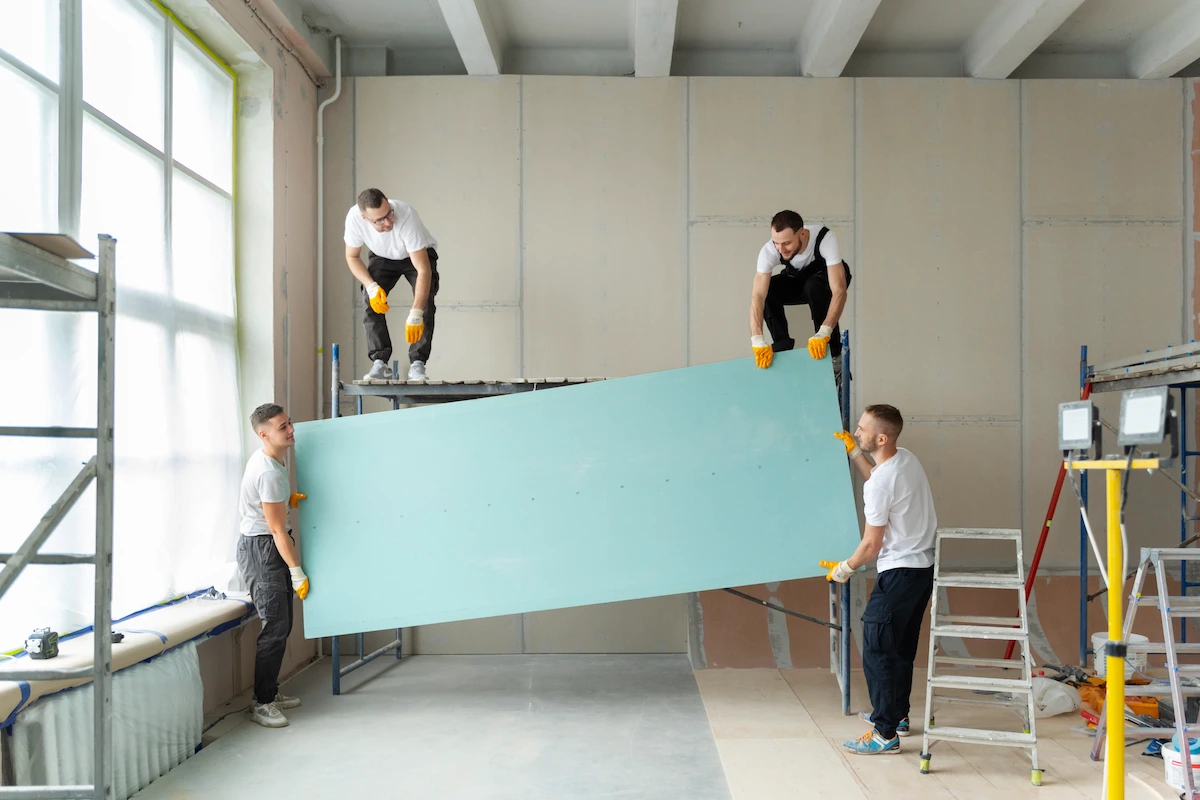 A professional facade renovation protects the building's value and visual appeal for decades.
Composite Panel and Cladding Systems
Aluminium composite panel (ACP) and other cladding systems are in high demand on modern-style villas, holiday apartments and commercial buildings. Key technical points for Antalya installations:
- Ventilated facade system: The air gap between the cladding and the wall prevents heat transfer from sun-heated panels to the wall surface. In Antalya this measurably reduces air-conditioning load. Air circulation also prevents moisture accumulation behind the cladding.
- PVDF-coated aluminium: In Antalya's coastal zone, PVDF (polyvinylidene fluoride) coated aluminium panels offer the most reliable salt-air resistance. Compared with standard polyester coatings, PVDF delivers significantly longer UV and corrosion resistance.
- HPL (High Pressure Laminate) panels: HPL panels are an excellent choice for those who want a timber look without the maintenance. Unlike real wood they are unaffected by moisture and UV, will not crack and will not rot. Increasingly popular on contemporary villa facades.
- Fixings and substructure: All cladding systems require galvanised or stainless-steel fixing elements. In coastal salt-air environments, standard galvanising may be insufficient; grade A4 stainless steel fixings are the recommended choice.
Combining Thermal Insulation with Facade Renewal
An exterior renovation project is the ideal opportunity to improve the thermal envelope of the building at the same time. Doing both together saves both cost and disruption:
- ETICS (External Thermal Insulation Composite System): Known in Turkey as DICS or mantolama, this system bonds insulation boards to the wall face and then applies a render-and-paint system over them. In Antalya it reduces winter heating bills and, more significantly, prevents summer sun heat from transferring into the building interior.
- Antalya-specific insulation benefit: While Antalya winters are mild, summer sun is extremely intense. An insulation system keeps interior spaces cooler even when the facade surface reaches 60°C, reducing the air-conditioning load and saving energy year-round.
- EPS vs mineral wool: The two most common insulation materials in ETICS are EPS (expanded polystyrene) and mineral wool. Mineral wool is superior for fire safety and breathability, and its vapour permeability is advantageous during Antalya's high-humidity months.
- Thermal bridge elimination: Balcony connections, columns, beams and window perimeters are thermal-bridge-prone areas requiring careful detailing. If insulation continuity is broken at these points, energy loss and condensation problems will persist despite the overall insulation investment.
- Double-skin facade: In higher-performance projects, a double-skin system — with an air gap between the outer cladding and the building wall — provides markedly better thermal and acoustic performance.
Colour Selection: UV Resistance and Thermal Comfort
Facade colour is not a purely aesthetic decision — it has a direct impact on thermal comfort, material longevity and energy consumption. Antalya's solar intensity makes this choice particularly significant:
- Light colours and heat reflection: White, cream and light grey have high solar reflectance and bounce back most of the sun's energy. The facade surface stays cooler, thermal stress on materials is reduced, and less heat enters the building. This is the practical reason traditional Mediterranean architecture adopted white walls.
- Dark colours and UV degradation: Dark-coloured coatings undergo faster UV degradation, accelerating colour fade and promoting delamination of the coating layer. If dark colours are desired, only products with high-quality UV-stabilised pigments should be specified.
- Cool facade pigments: Modern coating technology offers IR-reflective pigments. These appear dark in visible light but reflect the infrared (heat-carrying) portion of sunlight. The result is a visually dark facade whose surface temperature is substantially lower than a conventional dark coating.
- Colour coordination: When choosing facade colours, consider harmony with neighbouring buildings, any municipal colour palette restrictions, and how the colour will appear at different times of day as the sun angle changes. The same colour can look noticeably different on a north-facing versus a south-facing wall.
Application Process and Seasonal Planning
The success of an exterior renovation depends as much on correct timing and careful workmanship as on material selection. Antalya's climate calendar directly influences scheduling:
- Risks of applying in summer heat: Between June and September, facade surfaces can reach 50-60°C. At these temperatures paints and renders skin over at the surface before the deeper layer has cured properly, leading to blistering and cracking. If summer application is unavoidable, work should be confined to early morning and late afternoon, avoiding midday entirely.
- Ideal application windows: The best periods for exterior facade work in Antalya are April-May and October-November. Temperatures of 15-25°C and moderate humidity allow most materials to cure at their optimum rate.
- Rain before and after application: Work should not begin if rain fell in the preceding 24-48 hours, and no rain must fall on freshly applied render or paint before the manufacturer's stated minimum dry time has passed.
- Phased application on large buildings: Tackling the entire facade at once is rarely optimal. Working in phases — scaffolding, substrate preparation, primer, topcoat — improves quality control and minimises disruption to building occupants.
- Scaffolding and safety: Certified scaffolding is mandatory for professional facade work. Improperly erected scaffolding creates serious safety hazards and can damage adjacent properties.
Maintenance Schedules and Long-Term Durability
A regular maintenance programme is essential to protect the investment made in facade renovation. Early intervention prevents small problems from developing into major repairs:
- Annual visual inspection: Every autumn, inspect all facade surfaces closely for colour change, surface cracking, blistering, salt efflorescence and biological growth. Issues caught early can be remediated at minimal cost; ignored, they escalate rapidly.
- Facade washing: The dust deposited by Antalya's dry summer winds and the grime left by winter rain should be removed at least once a year with a pressure washer. Areas showing algae or moss growth can be treated with a biocide-containing facade cleaner.
- Joint and interface zones: Window frames, door perimeters, material transitions and corner profiles are the most critical zones. Silicone or mastic joint sealants at these locations should be inspected every five to seven years and renewed when they show signs of ageing.
- Recoating cycle: A quality silicone or mineral render system can maintain its aesthetic performance for 10-15 years in Antalya. A surface clean and refresh coat every five to six years extends the system's life significantly. Standard acrylic paints typically need attention every four to five years.
- Natural stone maintenance: Stone-clad facades require an impregnating sealant application every two to three years to prevent moisture, salt and dirt from penetrating the stone's pores.
"The biggest mistake in Antalya facade projects is applying the same budget logic used for interiors to the exterior. Outdoor conditions are far more demanding — cutting corners on material quality costs much more in the long run."
For expert guidance on the right materials and approach for your building's exterior, contact us. We offer a free site visit and consultation.